Halbach Array Engineering LogoHalbach Array
Start inquiry
Halbach Array Engineering LogoHalbach Array
WhatsApp
Halbach Array Engineering LogoHalbach Array

China-based Halbach array OEM supplier supporting FEA simulation, precision assembly, and global delivery.

Engineering RFQ Inbox

[email protected]

Email RFQ Desk

Include target torque/speed, quantity, and delivery location.

Direct Engineer Chat

+8618857971991

Chat on WhatsApp

Use for drawing, specification, and RFQ clarification.

Products
  • Product Portfolio
  • Linear Halbach Arrays
  • Planar Halbach Arrays
  • Halbach Cylinders
  • Halbach Rings
  • Halbach Rotors
  • Magnetic Couplings
  • Magnetic Gears
  • Maglev Track Arrays
  • Undulator & Wiggler Magnets
  • Custom Assemblies
Applications
  • Application Matrix
  • Linear Motors
  • BLDC Motors
  • Maglev Systems
  • Magnetic Bearings
  • Flywheel Storage
  • NMR & MRI
  • Voice Coil Actuators
  • Eddy Current Brakes
  • Robotics & Actuators
Engineering & Quality
  • OEM Capabilities
  • FEA Simulation
  • Quality & Inspection
  • Precision Assembly
  • Magnetic Materials
  • Export Compliance
  • About Us
  • Contact / RFQ
Resources & Legal
  • Engineering Blog
  • Privacy Policy
  • Cookie Policy
  • Terms of Service
© 2026 Halbach Array. All Rights Reserved.|Halbach Array is operated by Linkup Ai Co., Ltd. with Linkup Precision magnetic assembly resources.|Project quality files available by agreed scope
← Back to OEM Capabilities

Magnetic Material Grades

Full sintered NdFeB and SmCo processing chain — from strip casting and hydrogen decrepitation through vacuum sintering, CNC machining, multi-layer coating, and salt-spray validated corrosion protection.

Best Fit For:Materials scientists, thermal engineers, and procurement teams selecting magnet grades for extreme environments.
N52 neodymium Halbach array

Where This Capability Fits

Best fit when the buyer needs grade selection tied to temperature, corrosion, radiation, demagnetization margin, and documentation rather than only maximum Br.

Discuss RFQ ScopeReview Products

Capability Highlights

  • Full NdFeB sintering chain: strip casting → hydrogen decrepitation → jet milling (3–7 µm) → orientation pressing → 1100°C vacuum sintering → CNC machining
  • Sm₂Co₁₇ heat treatment: 1190–1220°C sintering, 850°C aging, controlled 1°C/min cooling
  • Ni-Cu-Ni multi-layer coating (5–20 µm) with 72h salt spray (SST) and 48h pressure cooker (PCT) validation
  • High-temp NdFeB grades: N, M, H, SH, UH, EH, AH series for Halbach demagnetization margin
  • Radiation-resistant SmCo for accelerator, satellite, and medical cylinder applications

Typical Engagement Scope

  • eVTOL and high-speed motor rotors requiring UH/EH/AH thermal grades
  • NMR/MRI cylinders requiring long-term field stability (SmCo preferred)
  • Particle accelerator undulators in radiation environments
  • Semiconductor and cleanroom assemblies requiring outgassing-free coatings

Execution Focus

  • Reversible temperature coefficients and irreversible demagnetization curves
  • Intrinsic coercivity (Hcj) as the primary demagnetization guardrail
  • Sintered NdFeB processing: raw material weighing, vacuum induction melting, strip casting, hydrogen decrepitation (HD), jet milling to 3–7 µm, magnetic field orientation pressing, 1100°C vacuum sintering, precision multi-axis CNC machining to arc or trapezoid segments
  • Sm₂Co₁₇ three-step heat treatment: 1190–1220°C sintering and solution treatment, 850°C extended aging, controlled slow cooling at 1°C per minute to lock optimal magnetic domain structure
  • Coating engineering: 5–20 µm Ni-Cu-Ni electroplating, epoxy, Parylene, or phosphating with 72-hour salt spray test (SST) and 48-hour pressure cooker test (PCT) validation
  • Export and traceability documentation aligned to MOFCOM rare-earth controls

Buyer Decision Criteria

  • Maximum operating temperature and fault temperature.
  • Required Br, Hcj, demagnetization margin, and field stability.
  • Corrosion, humidity, vacuum, chemical, or radiation exposure.
  • Coating, traceability, and compliance documentation requirements.
Factory Capability

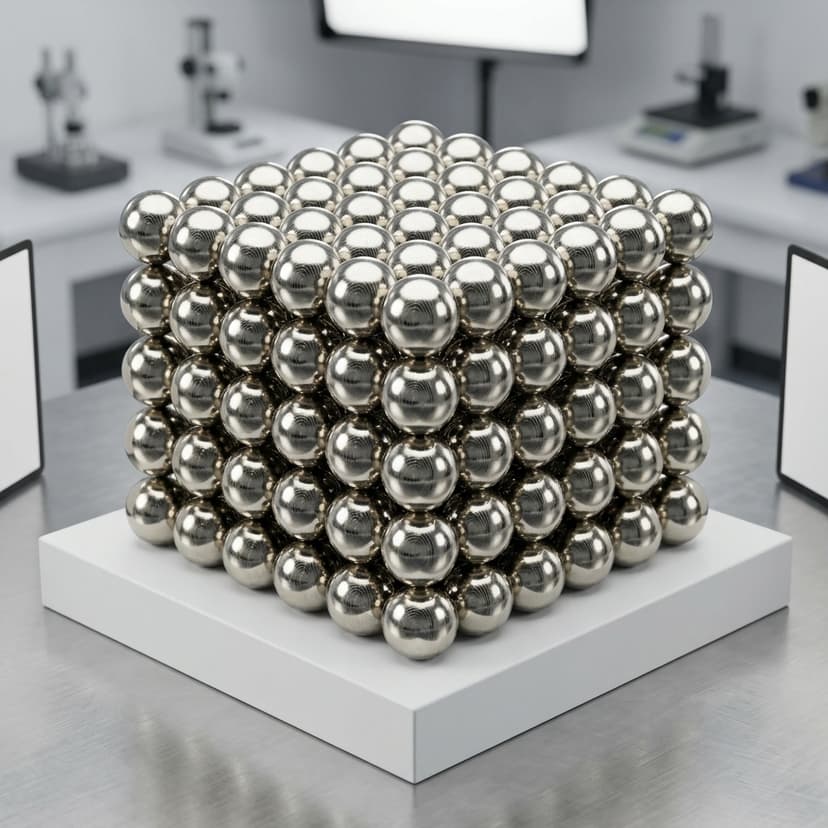
  • NdFeB grade selection from N, M, H, SH, UH, EH, and AH ranges by project scope.
  • SmCo support for high-temperature or radiation-sensitive assemblies.
  • Coating options including NiCuNi, epoxy, Parylene, and project-specific protection.
  • Material documentation aligned to the RFQ and delivery scope.

Program Evaluation Matrix

Program MetricTypical RangeProcurement Value
Max Operating TempUp to 350°C (SmCo) / 80–230°C (NdFeB by grade)Prevents irreversible field loss during operation and fault conditions.
Intrinsic Coercivity (Hcj)Grade-dependent: N (≥12 kOe), H (≥17), SH (≥20), UH (≥25), EH (≥30), AH (≥35 kOe); SmCo typically 15–30 kOeHcj is the main guardrail against demagnetization in high-temperature or high-field Halbach systems.
Coating Corrosion ResistanceNi-Cu-Ni (5–20 µm): 72h salt spray (SST), 48h pressure cooker (PCT); epoxy, Parylene, or phosphating by environmentSintered NdFeB corrodes rapidly without proper multi-layer coating. SST and PCT provide standardized evidence of protection quality.
Powder Particle Size3–7 µm after jet milling (sintered NdFeB)Particle size directly affects magnetic alignment quality during orientation pressing, which determines final Br and BHmax.

RFQ Preparation Checklist

  1. Max operating temperature
  2. Environmental exposure (salt/acid)
  3. Fault temperature, required Br/Hcj, radiation exposure, and coating preference
  4. Documentation needs: grade confirmation, coating report, or material trace package

Risk and Mitigation

  • Corrosion: NiCuNi, Epoxy, or Parylene conformal coatings.
  • Choosing grade by Br only: Review temperature, Hcj, demagnetization margin, and environment before final grade selection.
  • Coating mismatch with assembly process: Align coating, adhesive, potting, and handling method before pilot production.

Validation Deliverables

  • Material grade and coating confirmation.
  • Temperature-rating and demagnetization risk notes.
  • Inspection or supplier documents by agreed project scope.
  • Packaging and handling notes for strong or corrosion-sensitive magnets.

RFQ to Delivery Flow

  1. Send temperature, environment, field target, material restrictions, and document needs.
  2. We recommend grade and coating options with tradeoffs before quote freeze.
  3. Prototype approval locks material, coating, and traceability requirements.
  4. Production follows the approved material and inspection package.

Related Products

NdFeB Halbach array material set
High-temperature SmCo Halbach magnets
SmCo Halbach array assembly

Buyer FAQ

When should I choose SmCo over NdFeB?

When temperatures exceed 200°C or the assembly is exposed to high radiation levels (e.g., accelerators).

Is N52 always the best NdFeB grade?

No. N52 has high room-temperature remanence, but high-temperature Halbach arrays often need SH, UH, EH, AH, or SmCo grades for coercivity margin.

Which coating should be used for humid or chemical environments?

NiCuNi, epoxy, Parylene, or custom coating stacks can be reviewed once humidity, chemical exposure, temperature, and bonding method are known.

Related Resources

  • High-speed Halbach rotor material decisions
  • NMR and MRI cylinder stability needs
  • Quality inspection and material confirmation
  • Export compliance and shipment documents
  • Send CAD and RFQ details

Engineering RFQ Inbox

[email protected]

Email RFQ Desk

Include target torque/speed, quantity, and delivery location.

Direct Engineer Chat

+8618857971991

Chat on WhatsApp

Use for drawing, specification, and RFQ clarification.