
Buyer Decision Criteria
- Input speed, output speed, target ratio, and torque requirement.
- Available radial envelope and axial length.
- Pole pair and modulator design constraints.
- Efficiency target, thermal limit, and overload behavior.
High-efficiency contactless speed reduction/multiplication.
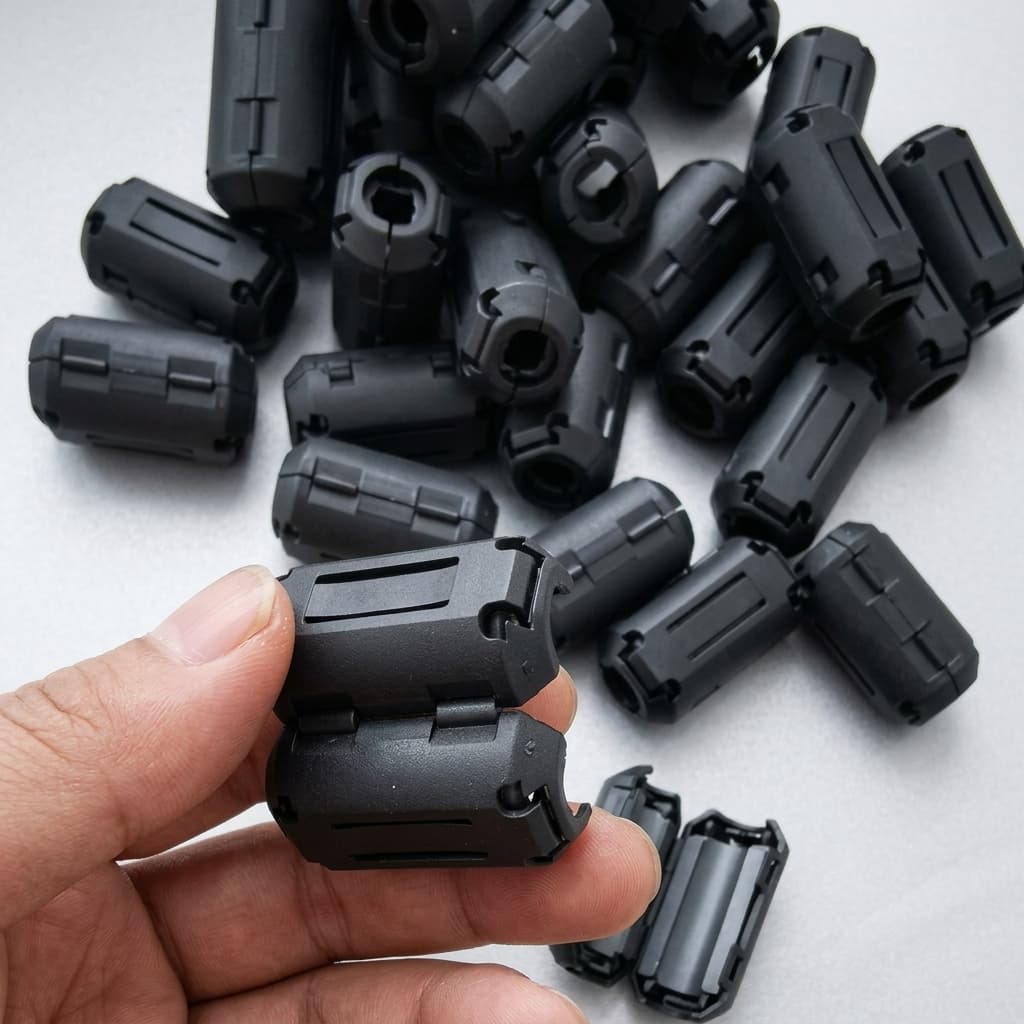
Best fit for teams evaluating non-contact transmission where maintenance, lubrication, overload protection, acoustic noise, or isolation matters more than a commodity gearbox.
| Metric | Typical Range | Why It Matters |
|---|---|---|
| Transmission Efficiency | Application-specific; validated by torque and loss model | Loss assumptions affect heating, cooling, and whether a magnetic gear is preferable to a mechanical gearbox. |
| Single-Stage Ratio | Typically 2:1 to 10:1 by pole combination | The ratio sets inner rotor, outer rotor, and modulator pole counts before mechanical layout. |
| Air-Gap Tolerance | Project-specific by torque density and package size | Small air-gap changes can strongly affect transmitted torque and heating. |
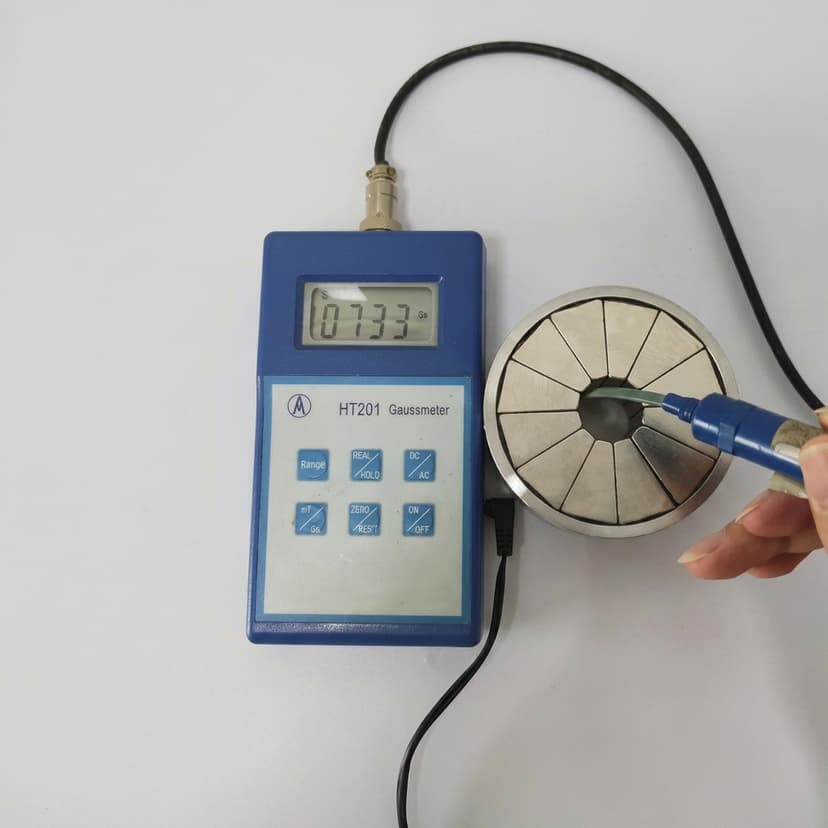
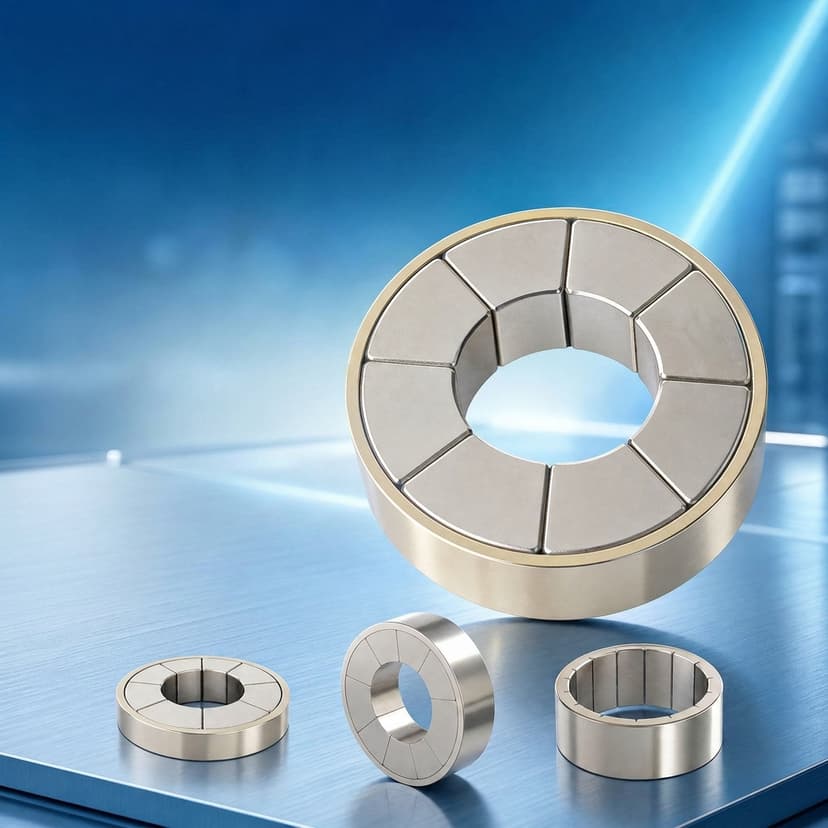
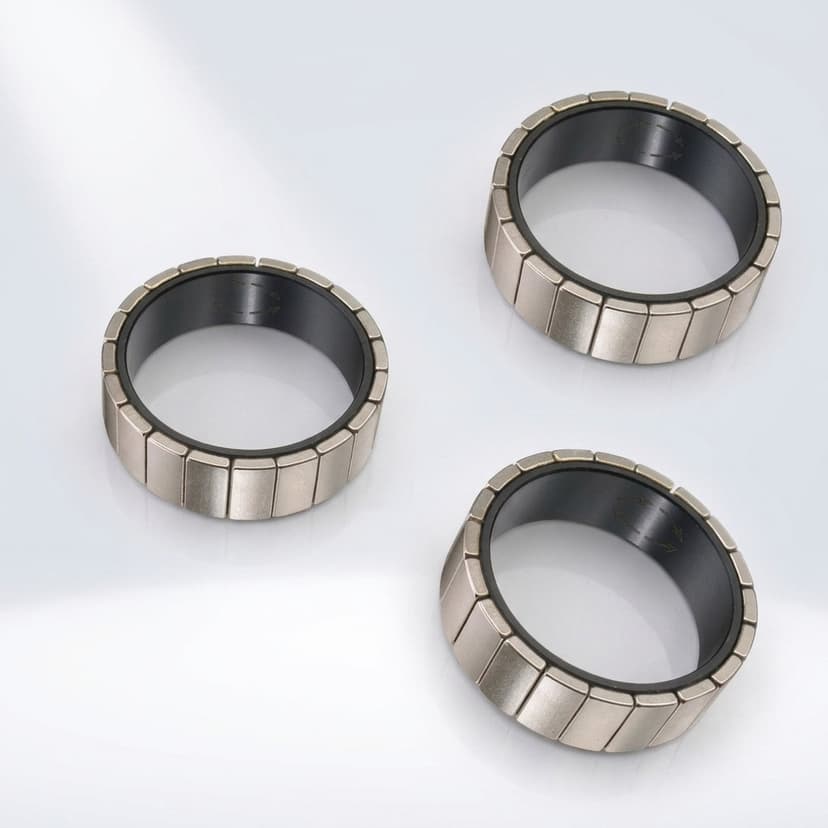

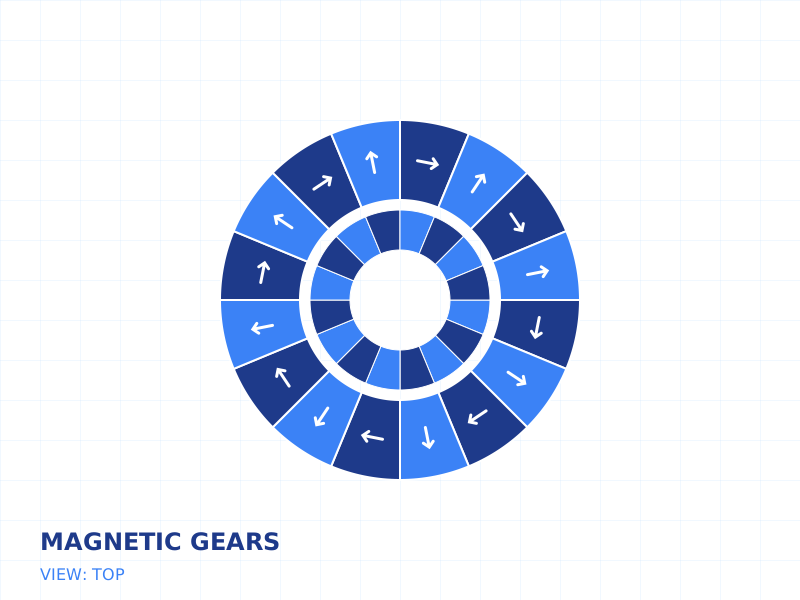
Typically between 2:1 and 10:1 in a single stage, depending on the pole combinations.
We primarily support the magnetic rotor and Halbach assembly scope; housings, bearings, and final gearbox integration are normally co-designed with the customer.
Include speed, torque, target ratio, radial and axial envelope, duty cycle, and whether overload slip is allowed.
Engineering RFQ Inbox
Include target torque/speed, quantity, and delivery location.
Direct Engineer Chat
+8618857971991
Use for drawing, specification, and RFQ clarification.