Halbach Array Engineering LogoHalbach Array
Start inquiry
Halbach Array Engineering LogoHalbach Array
WhatsApp
Halbach Array Engineering LogoHalbach Array

China-based Halbach array OEM supplier supporting FEA simulation, precision assembly, and global delivery.

Engineering RFQ Inbox

[email protected]

Email RFQ Desk

Include target torque/speed, quantity, and delivery location.

Direct Engineer Chat

+8618857971991

Chat on WhatsApp

Use for drawing, specification, and RFQ clarification.

Products
  • Product Portfolio
  • Linear Halbach Arrays
  • Planar Halbach Arrays
  • Halbach Cylinders
  • Halbach Rings
  • Halbach Rotors
  • Magnetic Couplings
  • Magnetic Gears
  • Maglev Track Arrays
  • Undulator & Wiggler Magnets
  • Custom Assemblies
Applications
  • Application Matrix
  • Linear Motors
  • BLDC Motors
  • Maglev Systems
  • Magnetic Bearings
  • Flywheel Storage
  • NMR & MRI
  • Voice Coil Actuators
  • Eddy Current Brakes
  • Robotics & Actuators
Engineering & Quality
  • OEM Capabilities
  • FEA Simulation
  • Quality & Inspection
  • Precision Assembly
  • Magnetic Materials
  • Export Compliance
  • About Us
  • Contact / RFQ
Resources & Legal
  • Engineering Blog
  • Privacy Policy
  • Cookie Policy
  • Terms of Service
© 2026 Halbach Array. All Rights Reserved.|Halbach Array is operated by Linkup Ai Co., Ltd. with Linkup Precision magnetic assembly resources.|Project quality files available by agreed scope
← Back to Products

Halbach Rotors

Lightweight, back-iron-free rotor assemblies for high-speed BLDC, PMSM, eVTOL distributed electric propulsion (DEP), and compact generator applications operating at 10,000–30,000+ RPM.

Target Buyer:Aerospace propulsion, robotics, and high-speed motor teams needing maximum power density with documented retention and balance evidence.
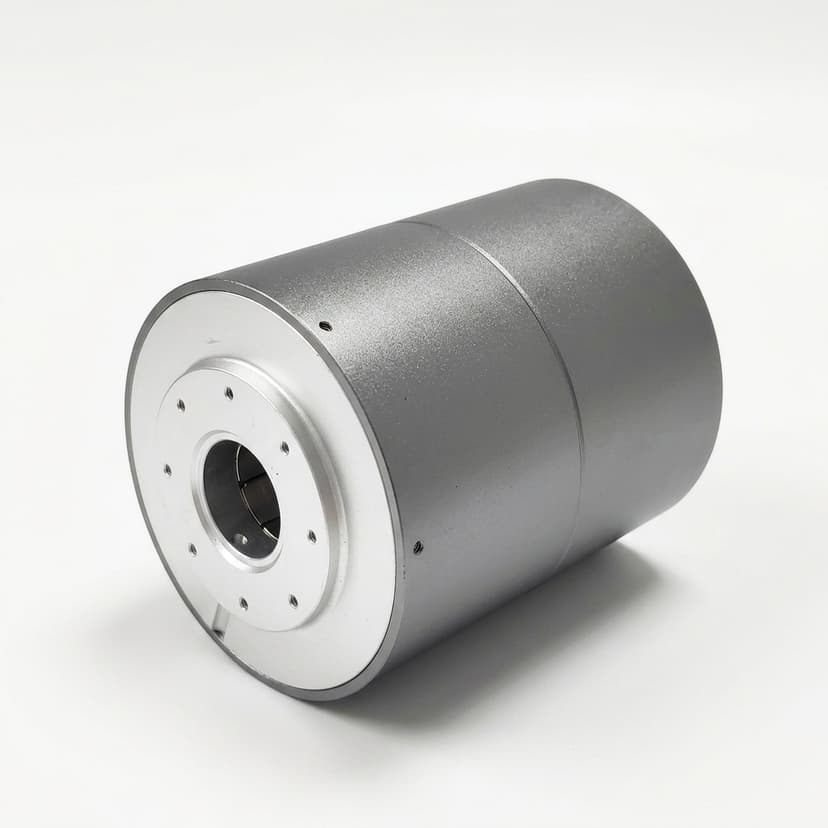
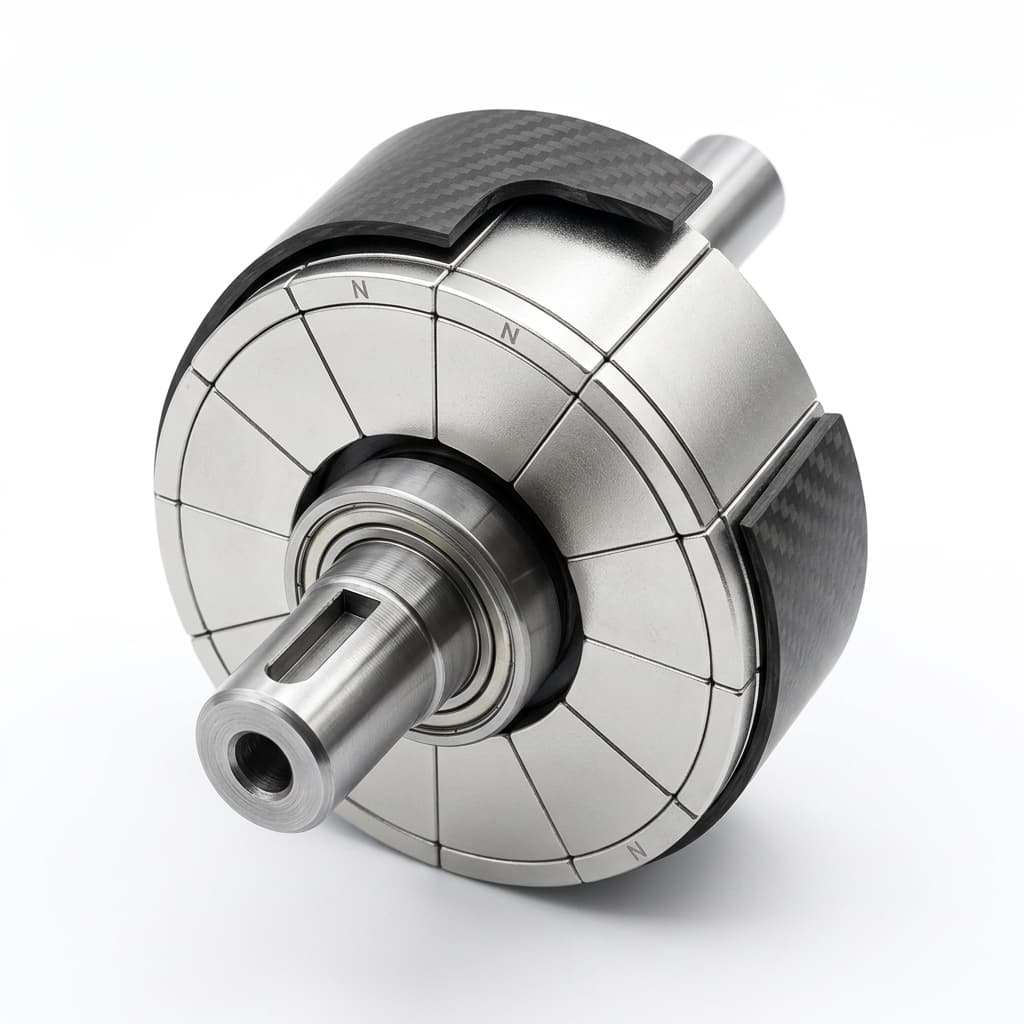
Halbach BLDC motor rotor with carbon fiber retention sleeve and precision shaft

Best-Fit Procurement Use

Best fit for motor teams that need higher air-gap flux, lower rotor mass, and controlled retention risk in high-speed or high-temperature rotary machines.

Send RFQRequest FEA Review

Capability Highlights

  • Eliminates heavy back-iron: 20–40% rotor weight reduction for improved thrust-to-weight ratio
  • Near-perfect sinusoidal air-gap flux: suppresses low-order harmonics, reduces cogging torque and stator iron losses
  • Carbon fiber wet winding sleeve retention for tip speeds up to 250 m/s (0.73 Mach) with near-zero eddy current loss
  • High-temperature grades (N48SH, N52UH, SmCo) for sustained operation in thermally demanding eVTOL and drone motor envelopes

Typical Applications

  • Drone motors
  • eVTOL distributed electric propulsion (DEP)
  • High-speed generators
  • Compact traction motors

Engineering Focus

  • Rotor inertia reduction through back-iron elimination and Halbach single-sided flux concentration
  • High-speed retention: carbon fiber wet winding (in-situ resin impregnation) preferred over stainless/Inconel metallic sleeves to avoid 600–700 W eddy current heating at operating speed
  • Dynamic balancing to ISO 1940 G1.0 for high-speed rotors after post-cure cylindrical grinding
  • Demagnetization margin analysis at operating temperature, fault temperature, and peak current conditions
  • Grade selection for eVTOL envelopes: N48SH/N52SH for moderate temperatures, UH/EH/AH or SmCo for extreme thermal environments

Buyer Decision Criteria

  • Rotor ID, OD, length, pole count, air gap, and target torque or back-EMF.
  • Maximum RPM, rotor tip speed, and sleeve retention strategy.
  • Operating temperature, demagnetization margin, and grade selection.
  • Dynamic balance grade, runout, and shaft or sleeve interface requirements.
Factory Capability

  • Internal and external rotor assembly with carbon fiber, titanium, or stainless retention options.
  • High-temperature NdFeB or SmCo sourcing for aerospace and generator programs.
  • Bonding and sleeve fit control for centrifugal load mitigation.
  • Dynamic balancing support by agreed ISO grade and rotor geometry.

Key Evaluation Matrix

MetricTypical RangeWhy It Matters
Rotor Weight Reduction20–40% vs. conventional SPM rotors with back-ironDirectly improves thrust-to-weight ratio in eVTOL/drone propulsion and reduces rotor inertia for faster acceleration.
Balance GradeISO 1940-1 G2.5 standard; G1.0 for high-speed applicationsHigh-speed rotors (10,000–30,000+ RPM) need dynamic balance evidence to minimize vibration, bearing load, and acoustic noise.
Tip Speed / RPM LimitUp to 250 m/s (0.73 Mach) with carbon fiber sleeve; lower with metallic retentionRetention design is driven by centrifugal stress at the magnet OD surface, not RPM alone. Carbon fiber wet winding provides the highest tip speed capability with near-zero eddy losses.
Sleeve Eddy Current LossCarbon fiber: near-zero; Stainless/Inconel: 600–700 W typical at high speedMetallic sleeve eddy losses generate heat that reduces magnet performance and increases cooling system complexity.

RFQ Checklist

  1. Pole count (2p)
  2. Maximum RPM
  3. Sleeve material requirements
  4. Operating temperature (N48SH, SmCo, etc.)
  5. Air gap, rotor ID/OD, balance grade, runout target, and duty cycle

Risk Controls

  • Magnet detachment at high RPM: Carbon fiber or titanium retention sleeves with precise interference fit.
  • Irreversible demagnetization: Review magnet grade, Hcj, thermal path, and fault-current exposure before prototype approval.
  • Sleeve-induced losses or heat: Compare carbon fiber, titanium, stainless, or Inconel by speed, conductivity, strength, and assembly process.

Validation Deliverables

  • Air-gap flux estimate or measured field profile.
  • Rotor dimensional inspection and runout records.
  • Balance report when included in the production scope.
  • Material grade, sleeve, coating, and adhesive process notes.

RFQ to Delivery Flow

  1. Share motor topology, pole count, air gap, RPM, temperature, sleeve preference, and forecast.
  2. We review magnetic performance and mechanical retention risk before quoting tooling.
  3. Prototype approval locks magnetic grade, sleeve method, adhesive, and balance target.
  4. Production follows the approved retention, inspection, and packaging process.

Product Gallery

eVTOL Halbach motor rotor
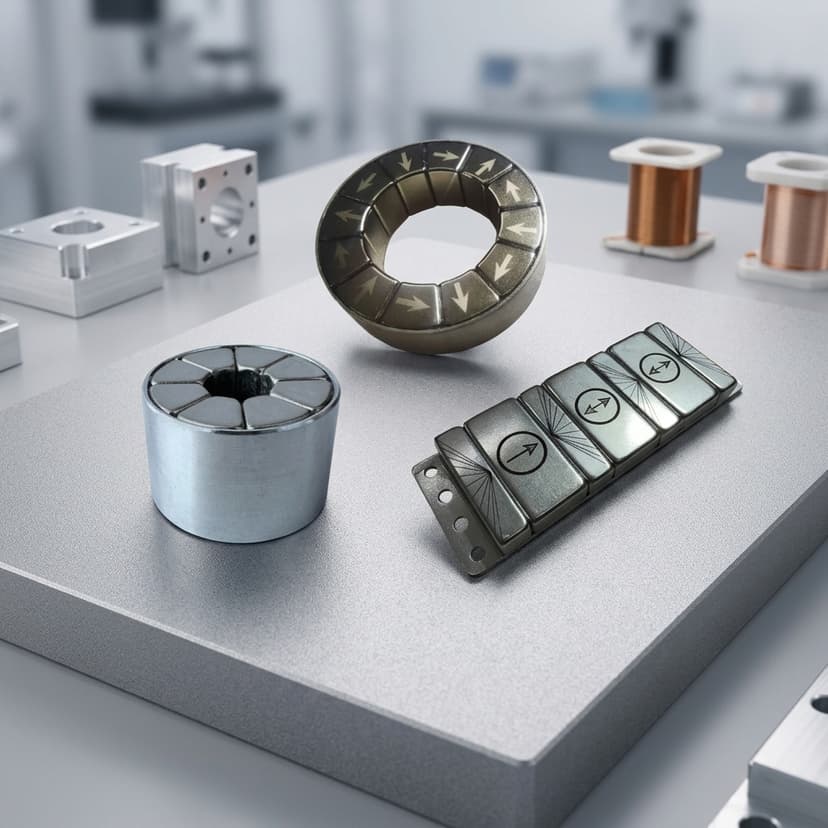
Halbach rotor for drone motor
High-speed sleeved Halbach rotor
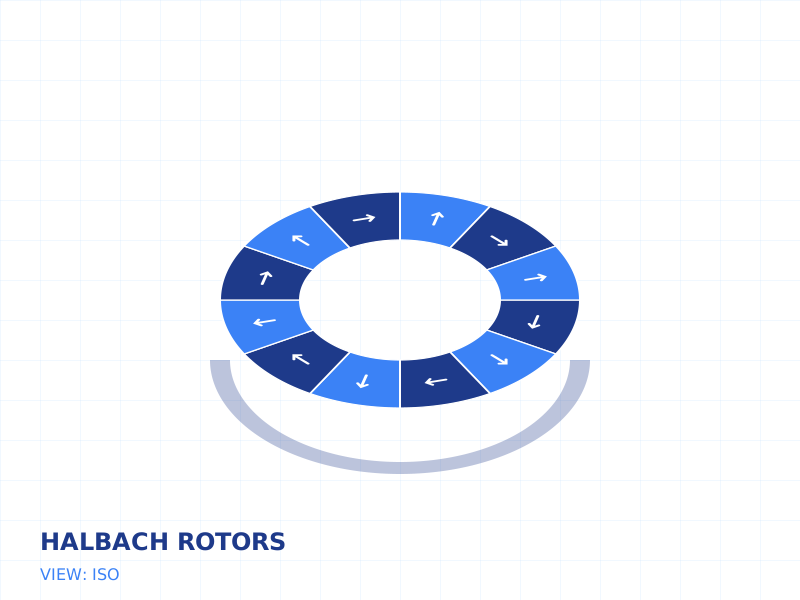
Halbach rotor isometric engineering illustration
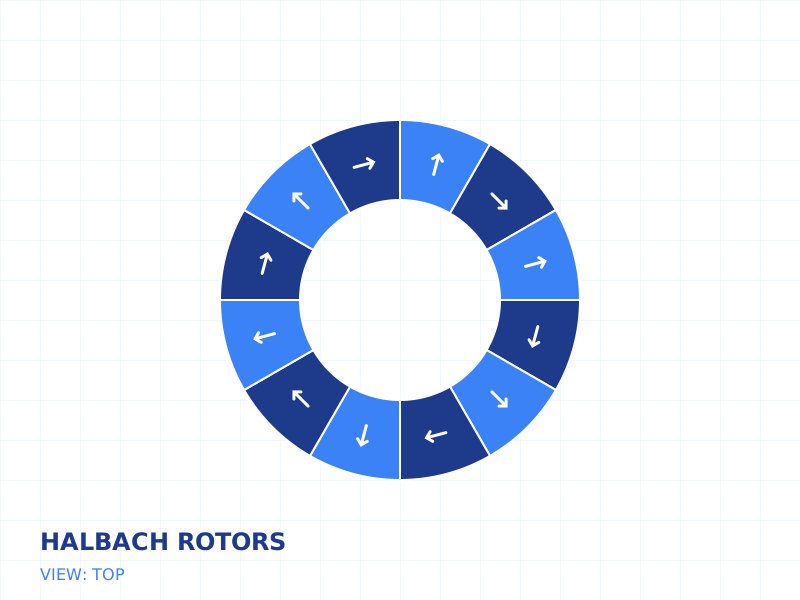
Halbach rotor top-view magnetization layout

Buyer FAQ

Can you provide dynamic balancing?

Yes, we provide dynamic balancing to ISO 1940-1 G2.5 or better for assembled rotors.

When is a carbon fiber sleeve preferred?

Carbon fiber is often preferred when high tip speed and low eddy-current heating matter, but final choice depends on rotor geometry and process limits.

Do you need motor winding data for a rotor quote?

At minimum we need air gap, pole count, RPM, temperature, and target torque or back-EMF; winding assumptions help validate the magnetic target.

Related Resources

  • BLDC motor and generator applications
  • Flywheel energy storage rotor constraints
  • Magnetic material grade selection
  • FEA and magnetic simulation support
  • Quality inspection and 3D Gauss mapping
  • Precision assembly and bonding controls
  • Send CAD and RFQ details

Engineering RFQ Inbox

[email protected]

Email RFQ Desk

Include target torque/speed, quantity, and delivery location.

Direct Engineer Chat

+8618857971991

Chat on WhatsApp

Use for drawing, specification, and RFQ clarification.