Halbach Array Engineering LogoHalbach Array
Start inquiry
Halbach Array Engineering LogoHalbach Array
WhatsApp
Halbach Array Engineering LogoHalbach Array

China-based Halbach array OEM supplier supporting FEA simulation, precision assembly, and global delivery.

Engineering RFQ Inbox

[email protected]

Email RFQ Desk

Include target torque/speed, quantity, and delivery location.

Direct Engineer Chat

+8618857971991

Chat on WhatsApp

Use for drawing, specification, and RFQ clarification.

Products
  • Product Portfolio
  • Linear Halbach Arrays
  • Planar Halbach Arrays
  • Halbach Cylinders
  • Halbach Rings
  • Halbach Rotors
  • Magnetic Couplings
  • Magnetic Gears
  • Maglev Track Arrays
  • Undulator & Wiggler Magnets
  • Custom Assemblies
Applications
  • Application Matrix
  • Linear Motors
  • BLDC Motors
  • Maglev Systems
  • Magnetic Bearings
  • Flywheel Storage
  • NMR & MRI
  • Voice Coil Actuators
  • Eddy Current Brakes
  • Robotics & Actuators
Engineering & Quality
  • OEM Capabilities
  • FEA Simulation
  • Quality & Inspection
  • Precision Assembly
  • Magnetic Materials
  • Export Compliance
  • About Us
  • Contact / RFQ
Resources & Legal
  • Engineering Blog
  • Privacy Policy
  • Cookie Policy
  • Terms of Service
© 2026 Halbach Array. All Rights Reserved.|Halbach Array is operated by Linkup Ai Co., Ltd. with Linkup Precision magnetic assembly resources.|Project quality files available by agreed scope
← Back to OEM Capabilities

Precision Assembly & Tooling

Safe, high-tolerance bonding and assembly of repulsive Halbach arrays — including non-magnetic fixture design, two-part structural epoxy and Loctite 638 retaining compound, carbon fiber wet winding for high-speed rotors, and thermal cure process control.

Best Fit For:Supply chain managers and rotor engineers needing stable yield rates and documented assembly processes.
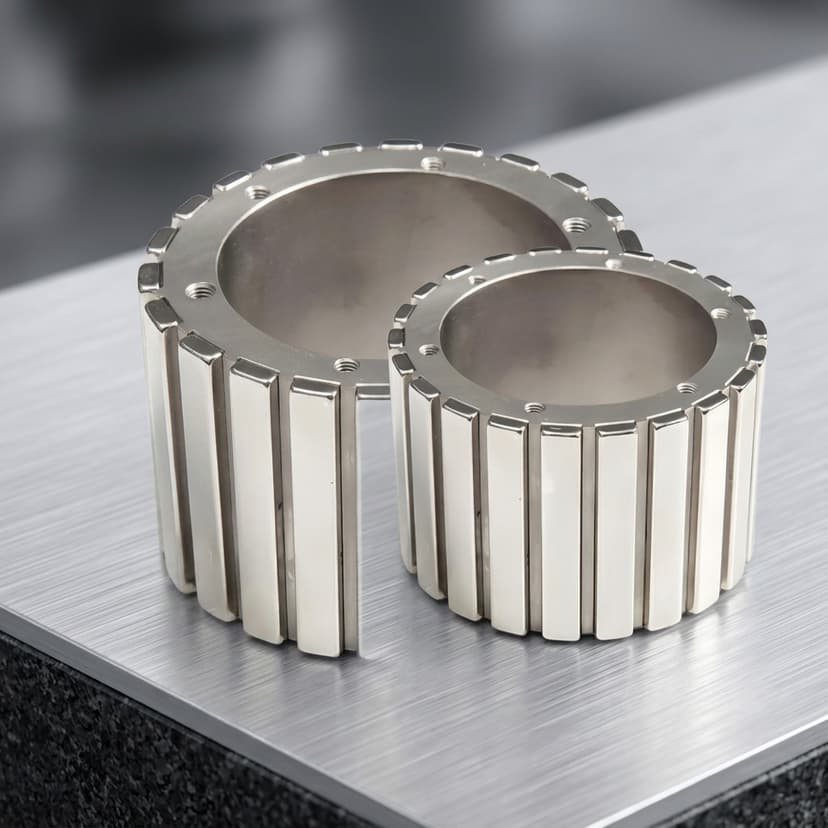
Precision Halbach array assembly

Where This Capability Fits

Best fit when the design cannot be assembled reliably by hand because adjacent magnets repel, flip, or shift before adhesive cure.

Discuss RFQ ScopeReview Products

Capability Highlights

  • Non-magnetic CNC fixtures isolating operators from high-repulsion assembly forces
  • Two-part structural epoxy for maximum shear strength, gap filling, and waterproof cure
  • Loctite 638 high-strength anaerobic retaining compound for metal-to-metal press-fit retention with minimal gap
  • Carbon fiber wet winding (in-situ resin impregnation) for high-speed rotor sleeve retention
  • Angle-control checkpoints with post-cure field orientation verification

Typical Engagement Scope

  • eVTOL and high-speed motor rotors requiring carbon fiber pre-stress sleeves
  • Halbach cylinders and rings with strong inter-magnet repulsion
  • Complex multi-axis arrays requiring fixture-controlled cure sequences
  • Mass production with repeatable adhesive, sleeve, and potting controls

Execution Focus

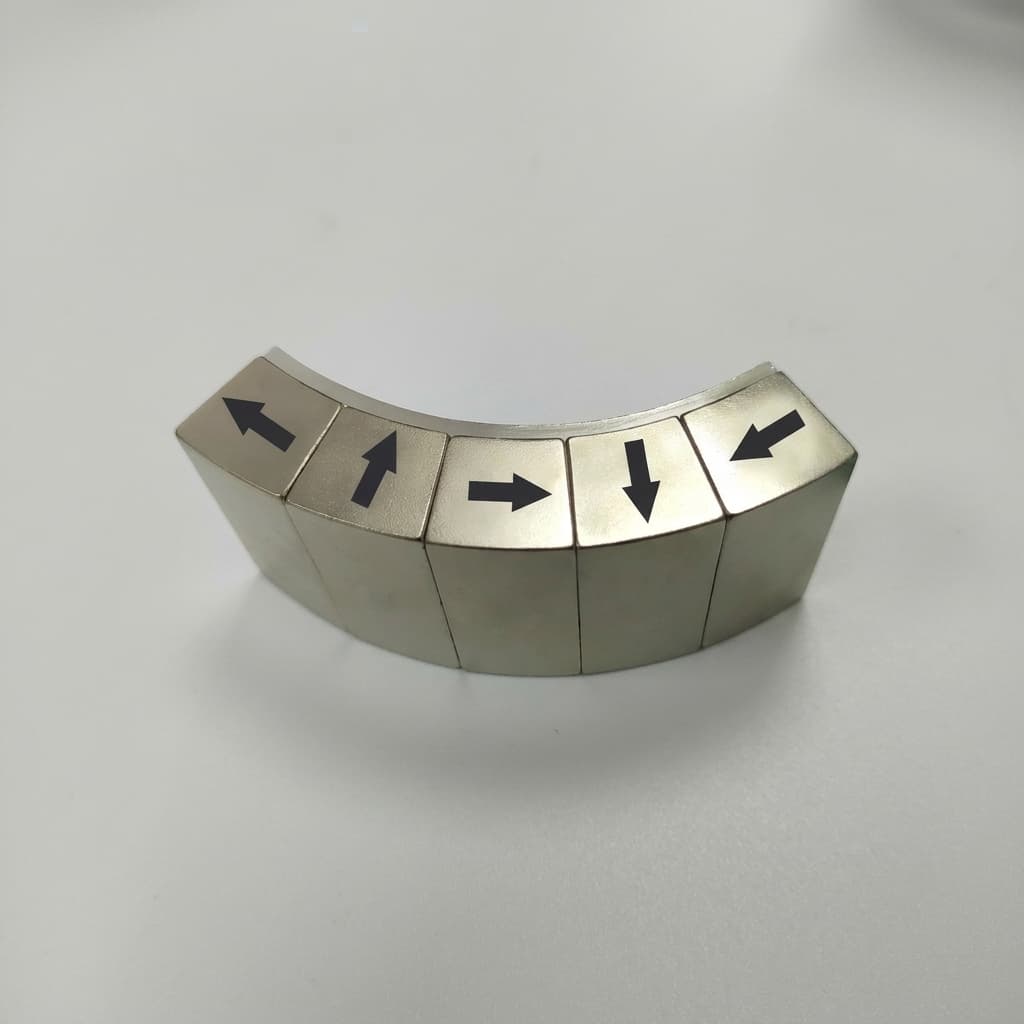
  • Assembly physics: adjacent Halbach magnets generate extreme repulsion forces that can flip, eject, or fracture brittle rare-earth segments during handling
  • Non-magnetic fixture design: custom aluminum, titanium, or PEEK tooling that constrains magnet position during adhesive cure without magnetic interference
  • Two-part structural epoxy: provides highest bond strength (>25 MPa shear), fills gaps, and cures to waterproof solid; preferred for most Halbach assemblies
  • Loctite 638 anaerobic retaining compound: used for metal-to-metal close-fit retention where minimal gap and high shear strength are required at low temperature
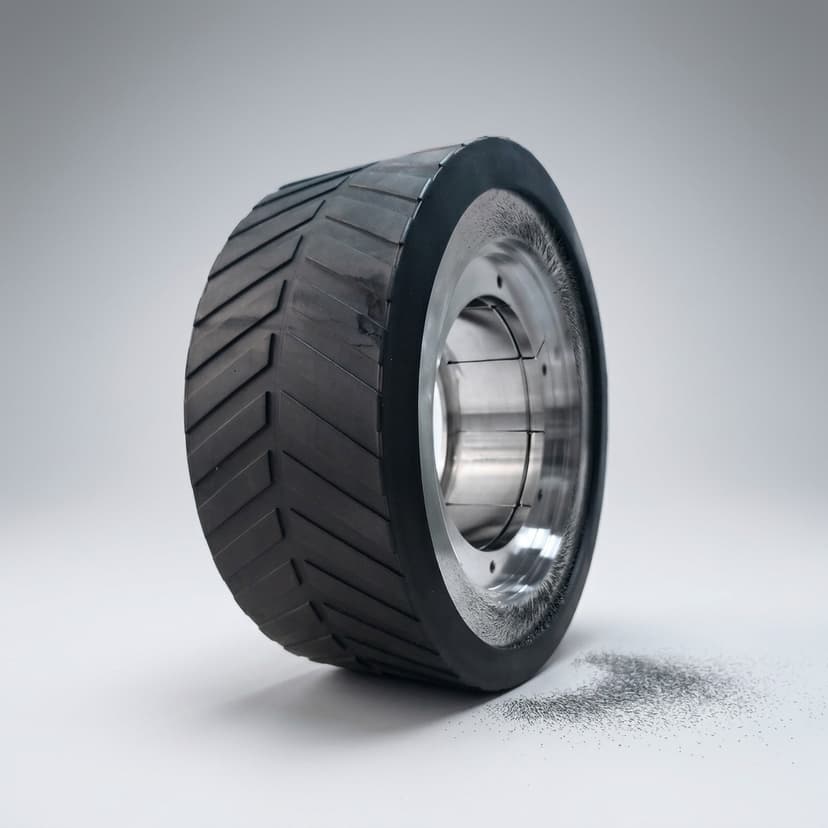
  • Carbon fiber wet winding: dry carbon tow passes through controlled resin bath before winding onto rotor surface; liquid resin fills micro-gaps between fiber and magnets, eliminates air interface, provides superior direct bonding and near-zero eddy current loss vs. metallic sleeves (stainless or Inconel: 600–700W eddy loss)
  • Post-cure cylindrical grinding to micron-level OD tolerance and ISO 1940 G1.0 dynamic balance verification

Buyer Decision Criteria

  • Magnetized versus unmagnetized assembly path and safety risk.
  • Fixture strategy for orientation, pitch, angle, and cure stability.
  • Adhesive choice, gap fill, temperature, humidity, and shear requirements.
  • Whether mechanical retention, sleeves, potting, or carriers are required.
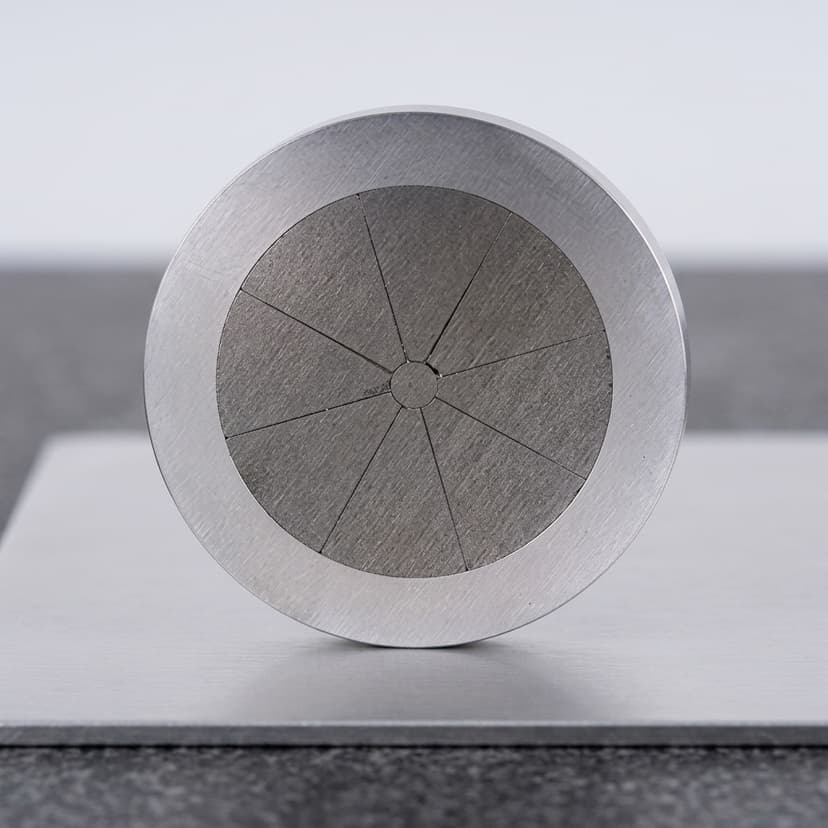
Factory Capability

  • Custom non-magnetic fixtures for high-repulsion assembly steps.
  • Structural epoxy, retaining compound, potting, and cure process review.
  • Carrier, sleeve, and mechanical retention integration.
  • Assembly process controls for prototype and repeat production.

Program Evaluation Matrix

Program MetricTypical RangeProcurement Value
Bonding Shear Strength>25 MPa (two-part structural epoxy); >20 MPa (Loctite 638 retaining compound)Ensures magnets do not detach under extreme operational forces, vibration, or thermal cycling.
Carbon Fiber Sleeve Eddy LossNear-zero vs. stainless/Inconel sleeves (600–700 W typical eddy loss at high speed)Carbon fiber wet winding eliminates metallic eddy current heating, enabling rotor tip speeds up to 250 m/s (0.73 Mach).
Rotor Balance GradeISO 1940 G2.5 standard; G1.0 when specified for high-speed rotorsPost-cure cylindrical grinding and dynamic balancing reduce vibration, bearing load, and noise at operating speed.
Fixture RepeatabilityDefined by pitch, angle, or datum tolerance per fixture drawingFixtures control the magnet movement that normally causes assembly variation and field distortion.

RFQ Preparation Checklist

  1. Assembly drawing
  2. Operating environment (humidity/temp)
  3. Magnetization direction, load case, cure constraints, and adhesive preference
  4. Retention method: bonding only, carrier, potting, sleeve, or mechanical clamp

Risk and Mitigation

  • Adhesive failure: Plasma surface treatment before potting/bonding.
  • Magnet snap-in or operator injury: Use non-magnetic tooling, controlled insertion paths, and written handling steps for magnetized assembly.
  • Orientation shift during cure: Hold magnets in fixture until adhesive reaches handling strength and verify field orientation after cure.

Validation Deliverables

  • Assembly process and fixture-control notes.
  • Critical orientation and dimension inspection.
  • Adhesive or potting material confirmation.
  • Risk-control notes for approved production samples.

RFQ to Delivery Flow

  1. Send assembly drawing, magnetization direction, environment, load, and temperature.
  2. We review fixture needs and bonding strategy before sample quote.
  3. Prototype approval locks fixture, adhesive, and inspection requirements.
  4. Production repeats the approved process and material controls.

Related Products

SmCo Halbach array assembly
Linear Halbach array motor assembly
Cylindrical Halbach array assembly

Buyer FAQ

Can you handle fully magnetized assembly?

Yes. Fully magnetized assembly is reviewed with non-magnetic tooling, controlled insertion paths, and fixture-specific handling steps.

How do you choose the adhesive?

Adhesive choice depends on temperature, humidity, gap fill, shear load, chemical exposure, and whether potting or mechanical retention is also used.

Can assembly tooling be reused for production?

Yes. Prototype fixtures are often refined into production tooling once pitch, angle, cure, and inspection criteria are approved.

Related Resources

  • Custom Halbach assemblies
  • Halbach cylinders that need angle control
  • Halbach rotors with sleeve retention
  • Send CAD and RFQ details

Engineering RFQ Inbox

[email protected]

Email RFQ Desk

Include target torque/speed, quantity, and delivery location.

Direct Engineer Chat

+8618857971991

Chat on WhatsApp

Use for drawing, specification, and RFQ clarification.