Halbach Array Engineering LogoHalbach Array
Start inquiry
Halbach Array Engineering LogoHalbach Array
Halbach array manufacturing for engineering procurement

Custom Halbach Arrays

From CAD review to field-mapped hardware: linear tracks, planar plates, cylinders, rings, high-speed rotors, couplings, and research modules engineered around your field target, envelope, temperature, quantity, and delivery schedule.

CAD / drawing reviewTarget B-field and air gapNdFeB / SmCo grade selectionSample, pilot, and batch paths

Engineering RFQ Inbox

[email protected]

Email RFQ Desk

Include target torque/speed, quantity, and delivery location.

Direct Engineer Chat

+8618857971991

Chat on WhatsApp

Use for drawing, specification, and RFQ clarification.

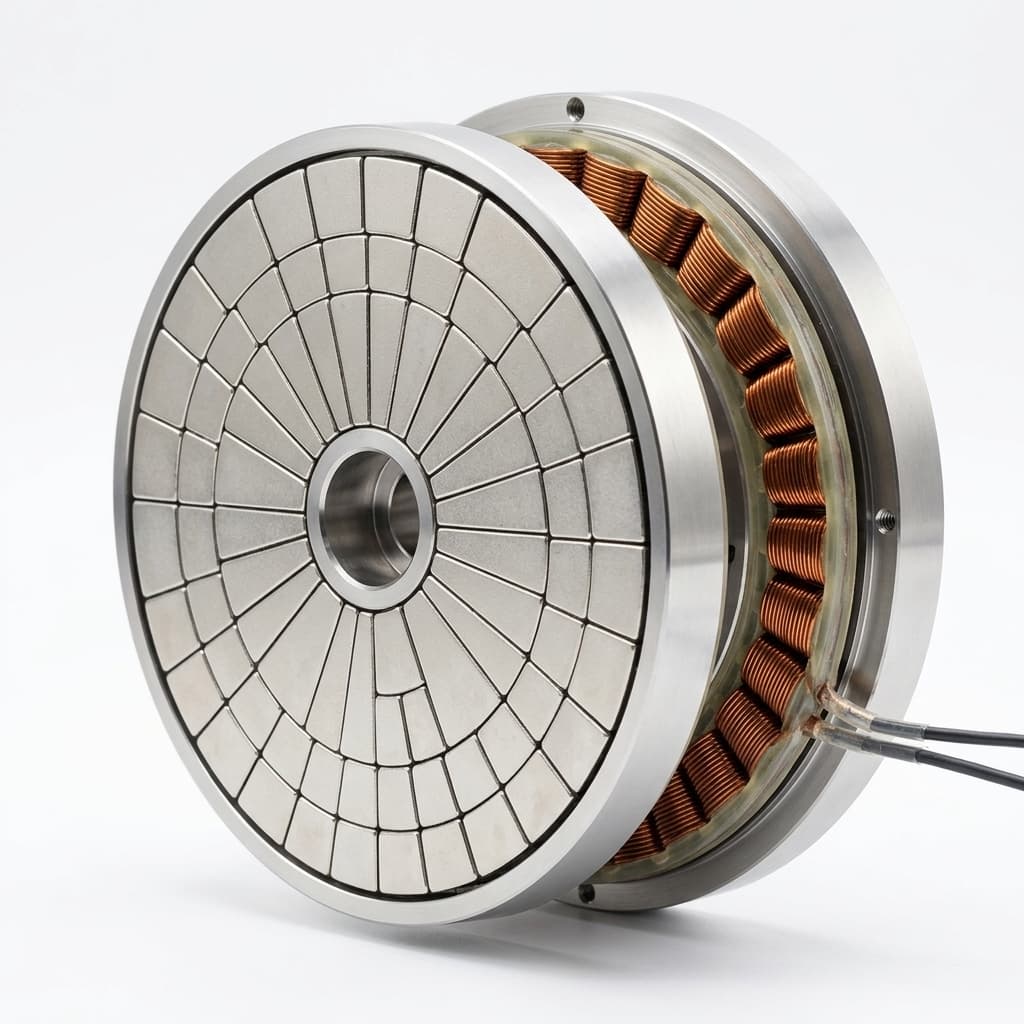
Coreless direct-drive Halbach axial flux motor with segmented magnet rotor and precision copper stator windings

Product Capability

Linear, planar, circular, cylindrical, rotor, coupling, gear, maglev, and research-grade Halbach assemblies.

Engineering Review

FEA, magnet grade selection, pole orientation, carrier design, and manufacturability feedback before tooling.

Inspection Evidence

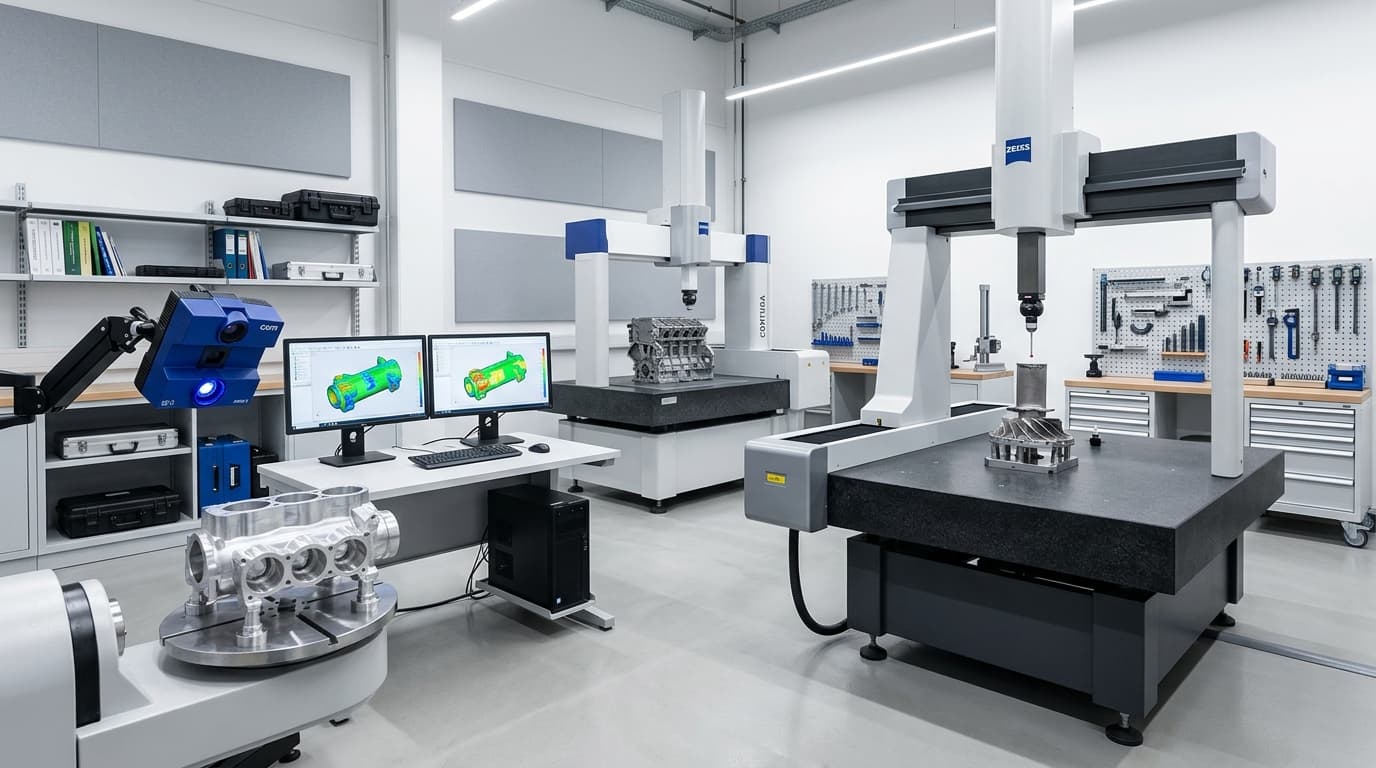
3D Gauss mapping, angular tolerance control, dimensional checks, coating review, and shipment documentation.

First Principles

Why Halbach Arrays?

Originally invented by physicist Klaus Halbach for particle accelerator beam control, the Halbach array produces a revolution in magnetic engineering through four core physical advantages that conventional magnet configurations cannot match.

Magnetization Direction Pattern

▲ STRONG FIELD SIDE (Working Surface)↑→↓←↑→↓←▼ WEAK / CANCELLED SIDE (No back-iron needed)

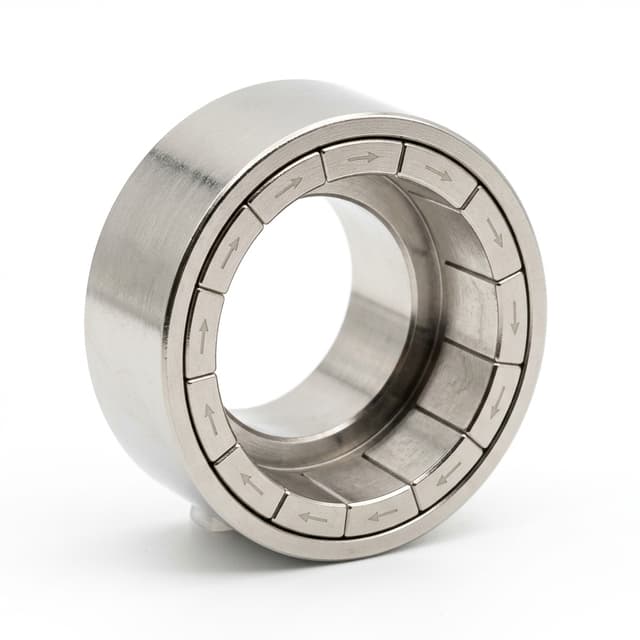
Adjacent magnets rotate their magnetization direction by 90°. The pattern creates constructive interference above (strong field) and destructive cancellation below (near-zero field).

Single-Sided Field Concentration

Unprecedented Flux Density

A Halbach array rotates the magnetization direction of adjacent permanent magnets to produce constructive interference on one side and destructive cancellation on the other. This concentrates significantly more usable magnetic flux in the working air gap without increasing the total magnet volume — the fundamental advantage that makes Halbach technology indispensable for high-field applications.

▸Up to 1.4× stronger field vs. conventional arrays at the same magnet volume
Eliminate the Back-Iron

Self-Shielding & Weight Reduction

Because the non-working side of a Halbach array produces near-zero stray field, the heavy ferromagnetic yoke (back-iron) that conventional magnet assemblies require can be drastically reduced or completely eliminated. In aerospace applications — drones, eVTOL, satellite actuators — this directly increases payload capacity, extends flight endurance, and reduces rotor inertia for faster dynamic response.

▸20–40% rotor weight reduction in back-iron-free Halbach motor designs

Low Harmonics, Low Losses

Sinusoidal Field Distribution

A well-designed Halbach arrangement produces an air-gap field distribution that closely approximates a pure sinusoidal waveform. This suppresses low-order harmonics, reduces cogging torque and torque ripple in rotating machines, and minimizes eddy-current and hysteresis losses in the stator core — resulting in higher energy conversion efficiency, lower acoustic noise, and smoother motion control.

▸Near-sinusoidal back-EMF waveform reduces stator iron losses and vibration

Less EMI, Smaller Instruments

Compact System Packaging

The self-shielding property of Halbach arrays eliminates stray magnetic fields that would otherwise interfere with nearby electronics, sensors, and precision instruments. This allows engineers to package magnetic assemblies into tighter envelopes — critical for semiconductor lithography stages, MRI bore magnets, robot end-effectors, and miniaturized voice coil actuators where every millimeter of clearance matters.

▸Near-zero stray field enables EMI-sensitive integration without additional shielding

What Buyers Need to Confirm Before Sourcing

Procurement-Ready Magnetic Hardware

The homepage now answers the practical questions that decide whether a custom Halbach project can move from concept to quote.

Topology and Product Fit

Compare linear arrays, planar plates, cylinders, rings, rotors, couplings, gears, maglev tracks, and undulator-style modules by field target and mechanical envelope.

Custom Range and Materials

Define magnet grade, pole count, segment angle, carrier material, sleeve, coating, adhesive, operating temperature, and corrosion exposure.

Quality Control Evidence

Plan incoming magnet checks, bonding fixture controls, dimensional inspection, 2D/3D field mapping, coating checks, and batch traceability.

Lead Time and Scale-Up

Separate prototype samples, pilot builds, and repeat production so engineering validation and procurement timing stay aligned.

Capability Snapshot

Industrial B2B Focus Areas

Quick view of the product range, scale-up path, and first-response workflow.

10+ Series

Multi-topology Arrays

EVT to MP

Sample to Batch Path

RFQ Review

Engineering Triage

Buyer Decision Map

Quote-Critical Details Before You Choose a Supplier

Custom Halbach arrays are rarely bought from a catalog. Engineers and sourcing teams need to know whether a supplier can hit the field target, hold the geometry, prove quality, and move from sample to repeatable delivery.

Product capability

Tracks, plates, rings, cylinders, rotors

Plus couplings, gears, maglev modules, VCM, NMR, and research assemblies.

Fastest quote path

CAD + field + temperature + quantity

These inputs let engineering screen grade, tolerance, tooling, and test scope.

Compare product familiesReview FEA support

Product Capability

Linear, planar, circular, cylindrical, segmented, axial, radial, and multipole layouts for motion, levitation, sensing, medical, and research hardware.

Customization Range

Pole pitch, segment count, magnetization direction, carrier plate, sleeve, adhesive, coating, temperature grade, and field map acceptance criteria.

Quality Control

Incoming magnet verification, controlled bonding fixtures, dimensional checks, angular tolerance records, 2D/3D gauss mapping, and packaging review.

Lead Time Planning

Prototype, pilot, and batch schedules are separated so long-lead magnets, machining, bonding, curing, inspection, and export packing are visible.

Engineering Support

Early FEA/DFM feedback helps adjust field strength, gap, bore uniformity, rotor retention, demagnetization risk, and manufacturable tolerances.

Sample to Batch Path

Sample builds confirm magnetic performance and assembly risk; pilot runs validate fixtures and inspection; batch runs lock repeatable controls.

How a custom Halbach project moves forward

A clear path reduces back-and-forth and keeps engineering validation aligned with purchasing deadlines.

01

RFQ screen

Review drawings, application, field target, temperature, quantity, and delivery country.

02

Engineering check

Confirm topology, magnet grade, pole orientation, carrier, tolerances, and inspection method.

03

Sample build

Machine parts, assemble with controlled fixtures, map fields, and document deviations.

04

Pilot to batch

Freeze fixture controls, packaging, test records, and repeat production schedule.

Send these parameters for a useful quote

A short but complete RFQ lets us answer feasibility and cost questions quickly.

  • CAD, STEP file, 2D drawing, or a dimensioned sketch with critical datums.
  • Target field, force, torque, bore uniformity, air gap, or surface field measurement point.
  • Operating temperature, duty cycle, environment, coating, corrosion, vacuum, or cleanroom needs.
  • Preferred material grade, pole count, segment count, carrier/sleeve material, and retention constraints.
  • Sample quantity, pilot quantity, annual forecast, delivery country, inspection report needs, and target delivery date.
Non-magnetic bonding fixture for Halbach array assembly

Assembly tooling

Fixtures control high-repulsion magnets during bonding and help hold pole alignment.

3D gauss mapping setup for Halbach array inspection

Field mapping

Mapped field data can be aligned with acceptance points, bore volume, or working gap.

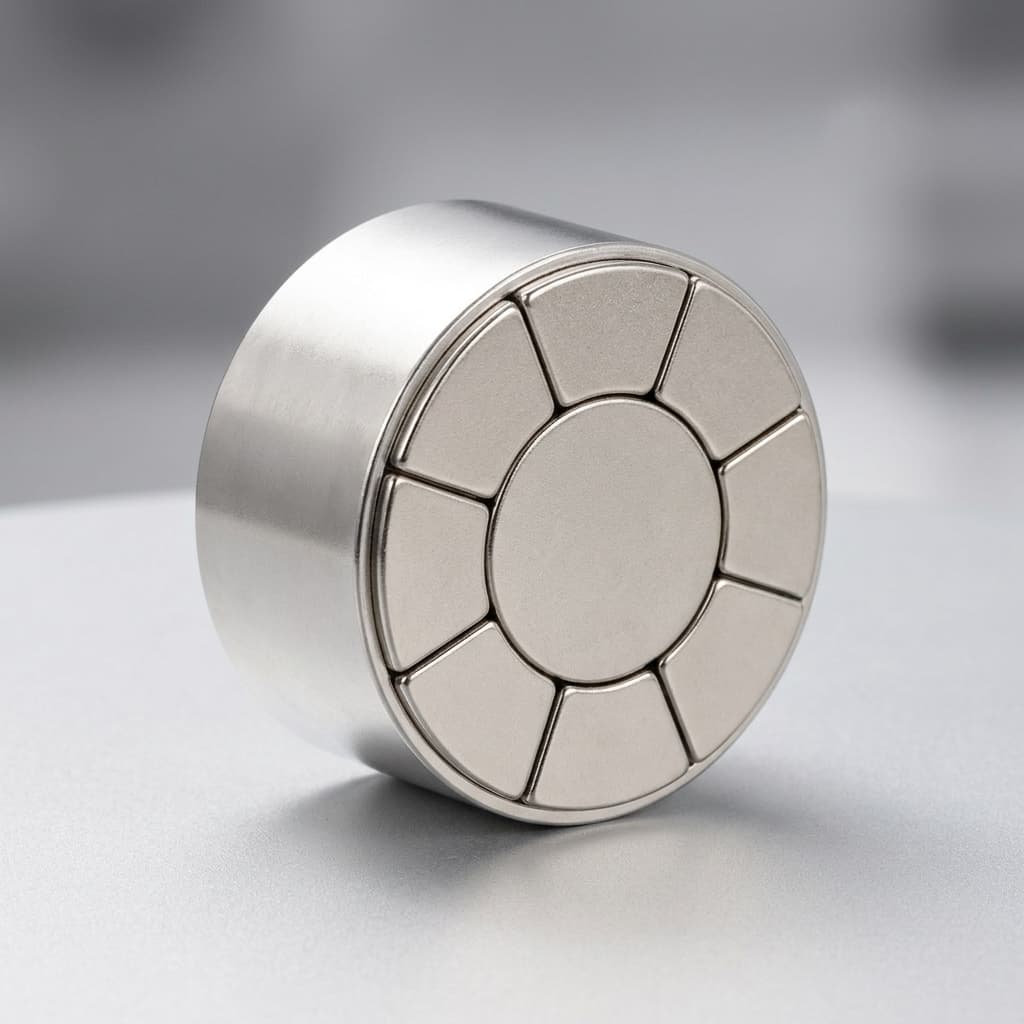
Custom Halbach magnetic module for OEM integration

Custom modules

Carrier design, magnet layout, and packaging are matched to the integration envelope.

Product Portfolio

Product Families Buyers Ask About First

Start with the architecture closest to your application, then refine pole pitch, field target, carrier, material grade, coating, and validation scope.

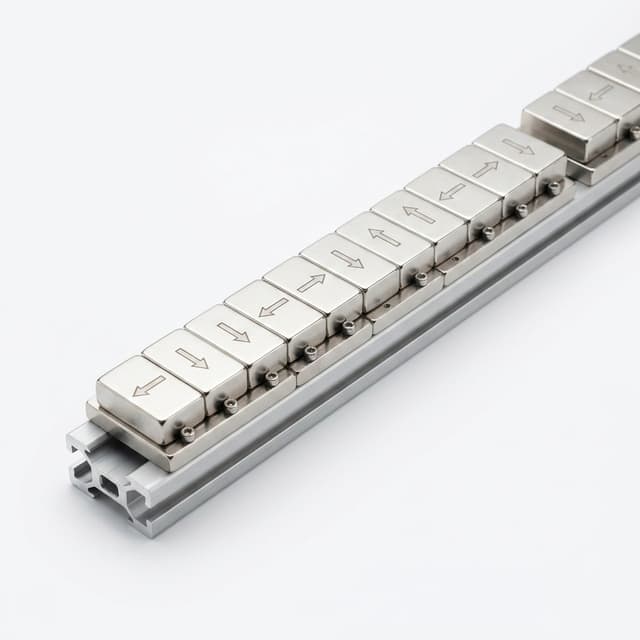
Modular linear Halbach array with NdFeB magnets on aluminum extrusion rail

Linear Halbach Arrays

High force-density magnetic arrays for linear motors and precision stages.

View Specs
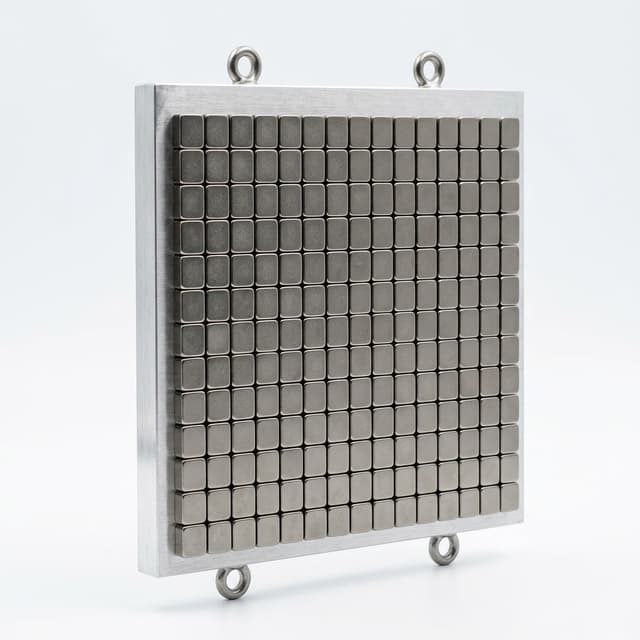
Single-sided planar Halbach magnet array with precision grid layout

Planar Halbach Arrays

2D flat array panels for high-force surface applications.

View Specs
Dipole Halbach cylinder magnet assembly with segmented NdFeB ring

Halbach Cylinders

Dipole and quadrupole cylinders for uniform bore fields.

View Specs
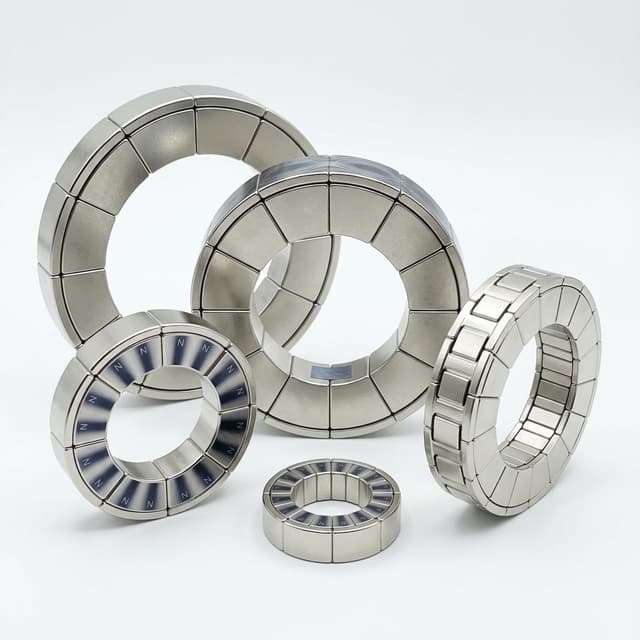
Multipole Halbach ring magnets in various sizes from miniature to large-bore

Halbach Rings

Segmented ring assemblies with multipole internal or external fields.

View Specs
View Full Product Catalog→

Magnetic Architectures

Standardized and custom Halbach arrays engineered for specific flux profiles, including linear, planar, and cylindrical multipole topologies.

  • Linear Halbach Arrays →
  • Planar Halbach Arrays →
  • Halbach Cylinders →

Application Integration

Pre-validated magnetic modules for high-RPM rotors, direct-drive linear motors, and frictionless eddy current braking systems.

  • Linear Motors →
  • Maglev Systems →
  • Magnetic Bearings →

Engineering Execution

Manufacturing control from magnetic model review to 3D Gauss inspection planning and precision multi-axis CNC machining.

  • FEA Magnetic Simulation →
  • Quality & Inspection →
  • Precision Assembly & Tooling →

Product Selection Snapshot for Buyers

Use this matrix to align engineering, sourcing, and management on the right Halbach architecture before opening a detailed RFQ thread.

FamilyBest FitKey MetricWhy It Matters
Linear Halbach ArraysEngineers designing high-speed, direct-drive linear motion systems.Flux Density (Surface): 0.8T - 1.2TDetermines the thrust force multiplier in linear motors.
Planar Halbach ArraysManufacturing equipment designers and automation engineers.Back-face Leakage: < 5%Protects sensitive electronics mounted behind the array.
Halbach CylindersResearch scientists and medical device engineers needing permanent uniform fields.Field Homogeneity: < 500 ppmCritical for NMR resolution and beam focusing accuracy.
Halbach RingsMechanical and electrical engineers designing rotating machinery.Angular Tolerance: ±0.5° to ±1°Ensures symmetrical magnetic field distribution and minimizes vibration.
Halbach RotorsAerospace propulsion, robotics, and high-speed motor teams needing maximum power density with documented retention and balance evidence.Rotor Weight Reduction: 20–40% vs. conventional SPM rotors with back-ironDirectly improves thrust-to-weight ratio in eVTOL/drone propulsion and reduces rotor inertia for faster acceleration.
Magnetic CouplingsFluid dynamics engineers and industrial equipment designers.Torque Density: Project-specific by gap, magnet volume, and barrierAllows coupling size to be reviewed against the required slip torque and containment barrier.
Magnetic GearsMechanical engineers looking to eliminate gearbox wear and maintenance.Transmission Efficiency: Application-specific; validated by torque and loss modelLoss assumptions affect heating, cooling, and whether a magnetic gear is preferable to a mechanical gearbox.
Maglev Track ArraysTransportation and automation R&D engineers.Lift Force Density: Project-specific by gap, speed, and conductor designDetermines the payload capacity per meter of track under the actual test condition.
Undulator & Wiggler MagnetsPhysicists and national laboratory procurement teams.Phase Error: < 2 degreesEnsures coherent emission of synchrotron radiation.
Custom Halbach AssembliesInnovators needing magnetic fields that standard shapes cannot provide.Prototyping Speed: 4-8 weeksAccelerates your R&D iteration cycles.
Knowledge Base

Latest Engineering Guides

Practical buyer-side checklists, design decision frameworks, and technical insights for custom Halbach projects.

Halbach Array Quality Control: Essential Factory Testing and Validation Metrics for Buyers
EngineeringProduct Engineering

Halbach Array Quality Control: Essential Factory Testing and Validation Metrics for Buyers

Halbach Array QC guide for OEM buyers: validate 3D flux maps, Helmholtz coil data, angular deviation, CMM, salt spray, and RFQ pass/fail metrics for sourcing.

avatar for Jimmy Su - Materials Scientist
Jimmy Su - Materials Scientist
2026/07/25
Halbach Array Assembly Tolerances: Mechanical Precision vs. Magnetic Performance
Product Engineering

Halbach Array Assembly Tolerances: Mechanical Precision vs. Magnetic Performance

Learn how Halbach array assembly tolerances affect flux, yield, and cost, with an RFQ decision matrix and supplier checks for precision magnetic builds.

avatar for Jimmy Su - Materials Scientist
Jimmy Su - Materials Scientist
2026/07/23
Halbach Array Adhesives and Encapsulation: A Procurement Guide for Extreme Environments
EngineeringProduct Engineering

Halbach Array Adhesives and Encapsulation: A Procurement Guide for Extreme Environments

Use RFQ checks to select structural epoxies, potting compounds, and retention sleeves for high-speed, high-temperature Halbach arrays.

avatar for Jimmy Su - Materials Scientist
Jimmy Su - Materials Scientist
2026/07/21
View All Guides→
Halbach field simulation and prototype review

Example: multi-pole rotor B-field review and prototype planning

Design & Validation

Advanced Magnetic FEA Simulation

Move beyond rough empirical formulas. Our engineering team can review 2D/3D magnetic models, tolerance assumptions, and measurement plans before cutting material.

  • Flux Density Optimization

    Improve peak surface field and bore uniformity while reducing harmonic distortion against the project target.

  • Thermal Demagnetization Risk

    Review operating temperature, grade selection, and demagnetization margin for SmCo and high-grade NdFeB.

  • Cost-to-Performance Ratio

    Avoid over-engineering by right-sizing magnet grades and carrier materials against modeled or measured force targets.

Engineering RFQ Inbox

[email protected]

Email RFQ Desk

Include target torque/speed, quantity, and delivery location.

Direct Engineer Chat

+8618857971991

Chat on WhatsApp

Use for drawing, specification, and RFQ clarification.

Technical Specifications

Engineering Capability Ranges to Confirm Early

Use these as screening ranges, then confirm project-specific limits during drawing review, simulation, sample build, and inspection planning.

Magnetic Field Strength

  • •Peak surface field up to 1.5T - 2.0T (Assembly dependent)
  • •High homogeneity bore fields below 1% variation
  • • Custom Halbach pole counts (Dipole, Quadrupole, Octupole)

Precision & Tolerances

  • •Angular assembly tolerance: ±0.5° to ±1.0°
  • •Dimensional tolerance: ±0.02mm to ±0.05mm
  • • Dynamic balancing for high-RPM Halbach Rotors (G2.5 / G1.0)

Materials & Thermal

  • •Sintered NdFeB (Up to AH, UH, EH grades for 200°C)
  • • SmCo (Samarium Cobalt) for aerospace & ultra-high temps (350°C)
  • • Protective coatings: NiCuNi, Epoxy, Parylene, Titanium sleeves

Testing & Validation

  • •3D Gauss Mapping (Automated multi-axis scanning)
  • • Helmholtz Coil flux measurement
  • • Salt spray & Temperature humidity bias (THB) testing

FAQ

RFQ and Procurement Support

Send the Parameters That Drive the Quote

Share your drawing, target field, temperature, material preference, quantity path, and delivery country. We will respond with engineering questions, feasibility notes, and quotation support.

Engineering RFQ Inbox

[email protected]

Email RFQ Desk

Include target torque/speed, quantity, and delivery location.

Direct Engineer Chat

+8618857971991

Chat on WhatsApp

Use for drawing, specification, and RFQ clarification.

WhatsApp
Halbach Array Engineering LogoHalbach Array

China-based Halbach array OEM supplier supporting FEA simulation, precision assembly, and global delivery.

Engineering RFQ Inbox

[email protected]

Email RFQ Desk

Include target torque/speed, quantity, and delivery location.

Direct Engineer Chat

+8618857971991

Chat on WhatsApp

Use for drawing, specification, and RFQ clarification.

Products
  • Product Portfolio
  • Linear Halbach Arrays
  • Planar Halbach Arrays
  • Halbach Cylinders
  • Halbach Rings
  • Halbach Rotors
  • Magnetic Couplings
  • Magnetic Gears
  • Maglev Track Arrays
  • Undulator & Wiggler Magnets
  • Custom Assemblies
Applications
  • Application Matrix
  • Linear Motors
  • BLDC Motors
  • Maglev Systems
  • Magnetic Bearings
  • Flywheel Storage
  • NMR & MRI
  • Voice Coil Actuators
  • Eddy Current Brakes
  • Robotics & Actuators
Engineering & Quality
  • OEM Capabilities
  • FEA Simulation
  • Quality & Inspection
  • Precision Assembly
  • Magnetic Materials
  • Export Compliance
  • About Us
  • Contact / RFQ
Resources & Legal
  • Engineering Blog
  • Privacy Policy
  • Cookie Policy
  • Terms of Service
© 2026 Halbach Array. All Rights Reserved.|Halbach Array is operated by Linkup Ai Co., Ltd. with Linkup Precision magnetic assembly resources.|Project quality files available by agreed scope