
← Back to Solutions

Eddy Current Brakes

Frictionless, wear-free magnetic braking and retardation systems.

Target Buyer:Safety and dynamics engineers.
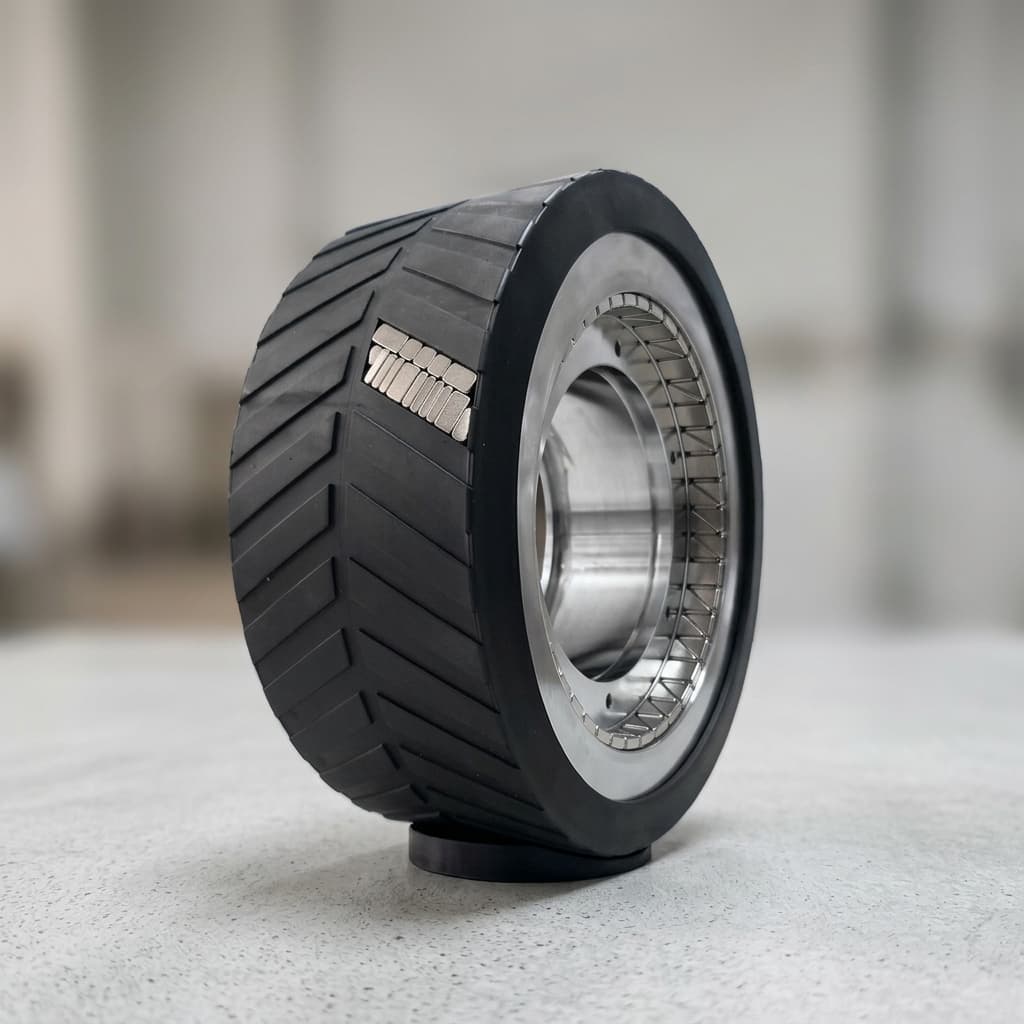
Halbach eddy current brake

Best-Fit Application Use

Best fit for safety and dynamics teams designing wear-free braking where field strength, conductor geometry, speed curve, and heat dissipation must be considered together.

Solution Highlights

  • Fail-safe operation
  • No particulate generation

Common Use Cases

  • Amusement rides
  • Dynamometers
  • High-speed trains

Implementation Focus

  • Deceleration curve tuning
  • Heat dissipation in the conductor
  • Speed-dependent force profile
  • High-temperature magnet grade and mounting gap control

Buyer Decision Criteria

  • Kinetic energy, entry speed, braking distance, and conductor geometry.
  • Temperature rise in the conductor and demagnetization margin in magnets.
  • Mounting, gap, environmental exposure, and fail-safe behavior.
  • Validation method for braking force versus speed.
Factory Support Scope

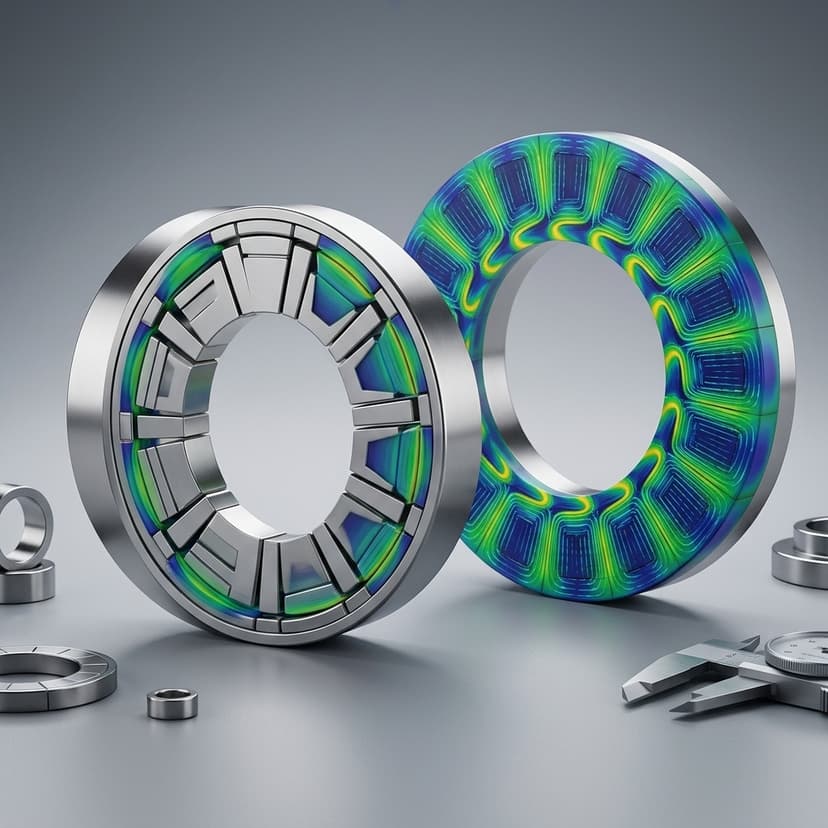
  • Linear, curved, or ring Halbach assemblies for brake modules.
  • High-temperature magnet grade and coating selection.
  • CNC carriers for stable gap and installation alignment.
  • Field mapping for customer braking-force simulation.

Application Evaluation Matrix

Evaluation MetricTypical RangeBuyer Relevance
Braking ForceScalable by magnet area, conductor design, speed, and gapDefines the expected stopping power without physical contact under the target speed curve.
Force Versus Speed CurveApplication-specificEddy current braking is speed dependent, so a single force value can be misleading.
Conductor Temperature RiseDefined by energy per stop and duty cycleHeat in the conductor can become the limiting factor even when magnets remain stable.

RFQ Preparation Checklist

  1. Kinetic energy to dissipate
  2. Braking distance constraints
  3. Entry speed, conductor material, duty cycle, and allowed temperature rise
  4. Mounting gap, fail-safe behavior, and braking force test method

Risk and Mitigation

  • Thermal demagnetization: High-temperature NdFeB or SmCo magnets.
  • Overstated low-speed stopping force: Evaluate braking force across the full speed curve and include mechanical stopping strategy if needed.
  • Conductor overheating during repeated stops: Define duty cycle, cooling path, conductor material, and temperature limit before magnetic layout freeze.

Validation Deliverables

  • Field profile at the specified working gap.
  • Critical dimension and mounting datum inspection.
  • Grade, coating, and temperature-rating documentation.
  • Packaging notes for strong magnetic modules.

RFQ to Delivery Flow

  1. Send speed, mass, target deceleration, gap, conductor material, temperature, and quantity.
  2. We review field layout and thermal-grade needs before quote freeze.
  3. Prototype arrays support customer braking-force testing.
  4. Production follows the approved field, carrier, and packaging controls.

Recommended Products

Halbach eddy current separator

Buyer FAQ

Does braking force fade at low speeds?

Yes, eddy current braking force is proportional to relative velocity, approaching zero as it stops.

Which Halbach products fit eddy current brakes?

Linear, curved, ring, or custom Halbach assemblies may fit depending on whether the conductor moves linearly or rotates.

What must be specified for a braking RFQ?

Send mass, entry speed, braking distance, conductor geometry, duty cycle, gap, temperature limit, and the target force curve.

Related Resources

Engineering RFQ Inbox

[email protected]

Include target torque/speed, quantity, and delivery location.

Direct Engineer Chat

WhatsApp Engineering Support

Use for drawing, specification, and RFQ clarification.