
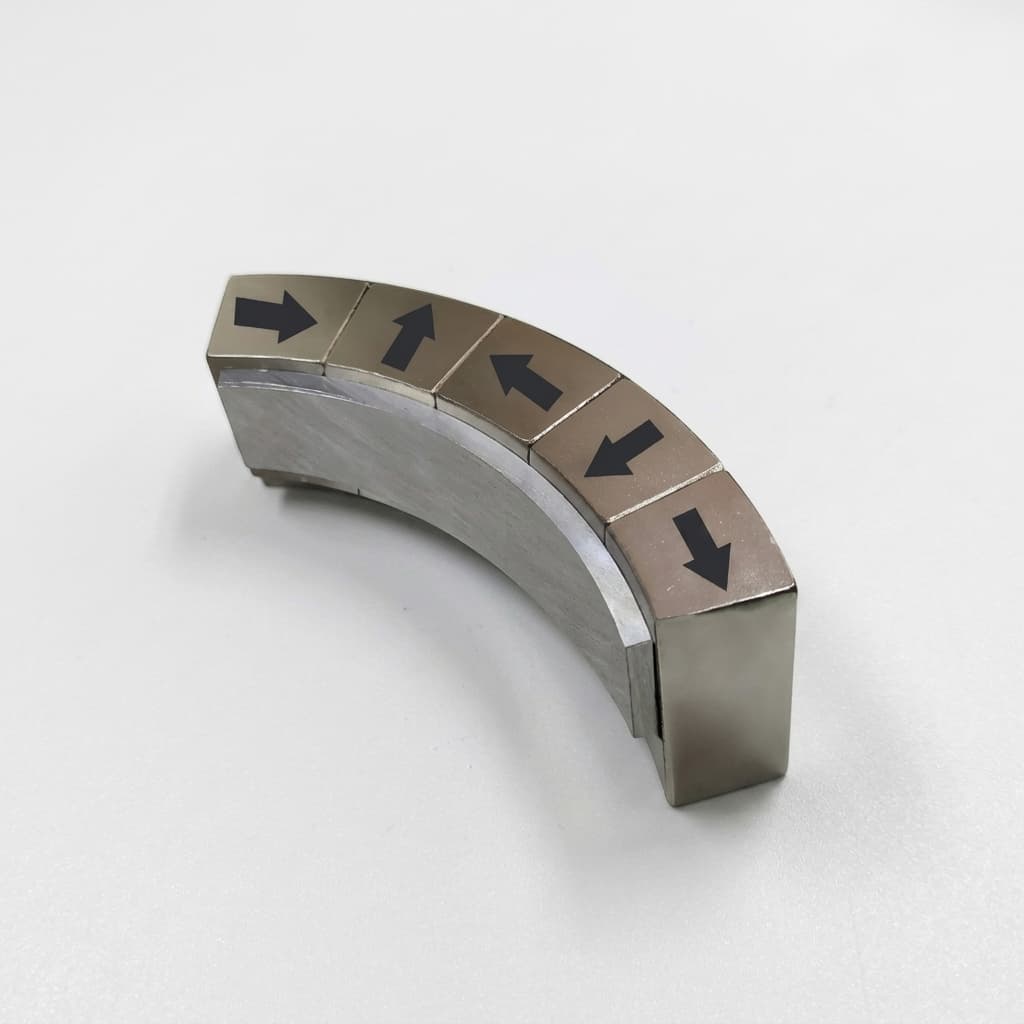
Preventing Thermal Demagnetization in Halbach Arrays: Grade Selection and GBD Guide
Guide to Halbach array thermal demagnetization, magnet grade selection, GBD limits, supplier validation, and RFQ checks for engineering teams.
High-speed electric vehicle (EV) traction motors, precision semiconductor linear actuators, and advanced aerospace generators have one thing in common: they increasingly rely on Halbach arrays to maximize power density and efficiency. By strategically arranging permanent magnets to augment the magnetic field on one side while canceling it on the other, engineers can eliminate heavy iron yokes and shrink the footprint of the motor, ultimately saving weight and improving dynamic response.
However, for engineering and procurement teams sourcing these complex assemblies, a critical and often overlooked risk factor lurks within the physics of the array itself: Catastrophic Thermal Demagnetization.
The unique geometric arrangement that gives a Halbach array its power also subjects its internal magnet blocks to extreme, continuous self-demagnetizing forces. When combined with the high operating temperatures of a high-speed motor—often exceeding 150°C due to eddy currents and stator coil heat—standard neodymium magnets will suffer irreversible flux loss. This degrades motor torque, increases heat generation, and eventually leads to complete system failure.
In this comprehensive guide, we will break down the fundamental physics of Halbach array demagnetization, compare the cost-to-performance ratio of high-temperature magnet grades (SH, UH, EH, AH), and analyze precisely when to use Grain Boundary Diffusion (GBD) technology versus traditional Heavy Rare Earth (HRE) alloying. We will also provide an actionable procurement checklist for evaluating supplier capabilities.
1. Executive Summary & Key Takeaways
For buyers and engineers evaluating Halbach array suppliers, keep these critical conclusions in mind to avoid costly redesigns and field failures:
- Halbach Physics Exacerbate Demagnetization: Because adjacent magnets in a Halbach array are forced into unnatural repelling orientations, the internal demagnetizing field (H_d) is significantly higher than in standard alternating-pole rotors. This is the root cause of premature failure in poorly specified arrays.
- Grade Specification is Not Enough: Simply specifying an "EH" (200°C) grade does not guarantee immunity. The working point on the B-H curve shifts dynamically based on the motor's load, meaning irreversible demagnetization can occur well below the rated maximum temperature.
- GBD is Cost-Effective but Has Boundaries: Grain Boundary Diffusion (GBD) reduces reliance on expensive Dysprosium (Dy) and Terbium (Tb), saving costs while maintaining high Remanence (B_r). However, it is fundamentally limited by penetration depth (typically effective only up to 3-4mm).
- Verification is Mandatory: Do not rely solely on static material datasheets. Require your supplier to provide dynamic Finite Element Analysis (FEA) simulating the demagnetizing field under short-circuit or peak-load thermal conditions.
2. The Physics: Why Halbach Arrays Are Uniquely Vulnerable
To understand why sourcing a Halbach array is fundamentally different from sourcing standard motor magnets, we must look at the magnetic flux vectors and how they interact in close proximity.
In a traditional surface-mounted permanent magnet (SPM) rotor, magnets are placed with alternating polarities (North-South-North-South). The magnetic flux naturally flows from a North pole, across the air gap into the stator, and returns through the adjacent South pole. The system is magnetically "relaxed," meaning the internal stress on the magnets is relatively low.
A Halbach array is the exact opposite. To force the flux to concentrate on the working side (the air gap), the array inserts "transition" magnets rotated at 90 degrees between the main radial poles. This means you are forcing the North pole of one magnet directly against the flank of another magnet.
Internal Demagnetizing Stress: Standard vs Halbach
These forced interactions create massive, localized demagnetizing fields. In the diagram above, the edges and corners where the magnets meet are subjected to severe magnetic stress.
As the temperature of the motor rises due to stator coil heat and eddy currents generated in the rotor, the Intrinsic Coercivity (H_cj) of the Neodymium magnets drops. If the localized internal repelling field exceeds the lowered coercivity threshold of the heated magnet, irreversible demagnetization occurs at those corners. This permanently alters the flux waveform, introduces torque ripples, and triggers a vicious cycle of more heat and further degradation.
3. High-Temperature Magnet Grades: What Procurement Needs to Know
To combat thermal demagnetization, engineers must specify higher-grade Neodymium-Iron-Boron (NdFeB) or transition to Samarium Cobalt (SmCo). For NdFeB, the suffix of the grade indicates its intrinsic coercivity and typical maximum operating temperature.
However, buyers must be aware that higher temperature grades carry severe cost premiums due to the addition of Heavy Rare Earth (HRE) elements like Dysprosium (Dy) and Terbium (Tb). Furthermore, adding these elements physically reduces the Remanence (B_r) of the magnet, meaning a higher-temp magnet is inherently "weaker" at room temperature than a standard grade. Balancing these trade-offs is the core challenge of Halbach procurement.
Magnetic Grade Selection Matrix for Halbach Rotors
| Grade Suffix | Typical Max Temp (T_max) | Intrinsic Coercivity (H_cj) | Relative Cost Index | Best Use Case in Halbach Applications |
|---|---|---|---|---|
| M / H | 100°C / 120°C | 14 - 17 kOe | $ | Low-speed industrial automation, consumer electronics. Not suitable for EV Halbach. |
| SH | 150°C | ≥ 20 kOe | $$ | Liquid-cooled industrial motors. Borderline for EV applications depending on thermal management. |
| UH | 180°C | ≥ 25 kOe | $$$ | Standard EV traction motors. Balances strong resistance to reverse fields with acceptable cost. |
| EH | 200°C | ≥ 30 kOe | $$$$ | High-performance EV motors, aerospace, and high-RPM military applications. High Dy/Tb content. |
| AH | 230°C | ≥ 35 kOe | $$$$$ | Extreme environments where active cooling is impossible or fail-safe reliability is mandatory. |
Crucial Engineering Note: The "T_max" listed by suppliers assumes a geometrically simple block operating in open air with no external opposing fields. Because a Halbach array generates its own intense internal opposing field, an "SH" grade magnet rated for 150°C might actually experience irreversible demagnetization at 110°C when assembled into the array. Always consult with your magnetic engineer to determine the true operating point.
4. The Dysprosium Dilemma: Traditional Alloying vs. GBD
To achieve the high coercivity required for UH, EH, and AH grades, magnet manufacturers historically relied on Traditional Alloying—mixing Dysprosium (Dy) or Terbium (Tb) evenly throughout the NdFeB melt during casting.
While effective, this creates a massive procurement headache:
- Cost and Supply Chain Risk: Dysprosium is notoriously expensive and subject to geopolitical price volatility. Relying heavily on high-Dy magnets exposes your entire supply chain to unpredictable cost spikes.
- Performance Trade-off: Dysprosium atoms couple anti-parallel to Iron atoms within the crystalline structure, which actively reduces the total magnetic flux (Remanence, B_r). This means you are paying more for a magnet that produces less raw torque per volume.
Enter Grain Boundary Diffusion (GBD)
To solve this, leading suppliers use Grain Boundary Diffusion (GBD). Instead of mixing the expensive HRE materials into the entire block, the NdFeB magnet is manufactured with standard, low-cost materials. Then, a thin layer of Dy or Tb is applied exclusively to the surface of the finished block. The magnets are heated in a vacuum, causing the heavy rare earths to diffuse down the "grain boundaries" between the Nd2Fe14B crystals.
This effectively isolates the individual magnetic grains, massively boosting Coercivity (H_cj) without significantly dropping the overall Remanence (B_r). It also uses up to 70% less Dysprosium, driving down procurement costs and insulating your BOM from raw material shocks.
Comparison: Traditional HRE vs GBD in Halbach
| Metric | Traditional HRE Alloying | Grain Boundary Diffusion (GBD) | Procurement Impact |
|---|---|---|---|
| Cost | Extremely High (Subject to HRE market spikes) | Moderate (Uses fractions of the HRE material) | GBD provides stable, predictable pricing for mass production. |
| Remanence (B_r) | Reduced by 3% to 8% | Maintained (Only ~0.5% reduction) | GBD delivers higher torque and power density. |
| Coercivity Distribution | Uniform throughout the entire block | Extremely high at the surface, lower at the core | Critical Halbach Limitation (See Section 5). |
| Process Time | Standard lead time | Adds 1-2 weeks to production | Must be factored into inventory and supply chain planning. |
5. The Engineering Limits of GBD in Halbach Arrays
While GBD sounds like a silver bullet for procurement teams, engineering teams must be acutely aware of its physical limitations, especially when designing Halbach arrays for large-scale applications.
The Penetration Limit: GBD relies on thermal diffusion, which is a slow and depth-limited physical process. The Dy/Tb elements can only penetrate effectively to a depth of roughly 3mm to 4mm from the surface.
If your motor requires large, thick Halbach segments (e.g., a 10mm thick wedge for a wind turbine or a large industrial traction motor), the core of the magnet will not receive the coercivity boost. Because Halbach arrays have intense demagnetizing fields specifically at their interfaces, a thick magnet relying solely on GBD might suffer core demagnetization, collapsing the entire array's performance from the inside out.
The Engineering Solution: Laminated Halbach Segments If large blocks are needed, engineers must use Laminated Halbach Arrays. By slicing the hypothetical 10mm block into three 3.33mm blocks, treating them individually with GBD, and then gluing them back together, you achieve uniform high coercivity throughout the volume. This maintains the cost benefits of GBD and simultaneously reduces eddy current losses—a double win for high-speed applications.
6. How to Verify Supplier Demagnetization Capabilities
Do not accept a supplier's raw material datasheet as proof that a Halbach array will survive your motor's operating temperatures. Procurement and quality teams must require strict testing and simulation validations before moving to mass production.
- Require Dynamic 3D FEA (Finite Element Analysis): The supplier or your engineering team must model the specific geometry of the Halbach array, apply the maximum expected temperature, and inject the maximum short-circuit stator current to simulate the absolute worst-case demagnetizing field.
- Irreversible Flux Loss Testing: Suppliers must provide test reports showing the open-flux measurement of the magnets at room temperature, followed by heating to the maximum specified temperature (T_max) for 2 hours, cooling back to room temperature, and re-measuring. The irreversible flux loss should be ≤ 5%.
- High-Temperature Fluxmeter Sweeps: Advanced OEMs will test the assembled Halbach rotor (or segments) in a heated Helmholtz coil to verify global waveform stability at operating temperatures. If a supplier cannot perform heated testing, they are a high-risk partner.
7. The High-Temp Halbach Procurement Checklist
Before issuing a Purchase Order (PO) for high-speed EV or industrial Halbach arrays, ensure your engineering and procurement teams have aligned on the following critical checkpoints:
- Determine True Operating Point: Have we calculated the actual internal demagnetizing field (H_d) at the corners of our Halbach segments, rather than just using open-circuit estimates?
- Select Appropriate Grade: Have we specified an SH, UH, or EH grade that accounts for both the stator heat and the internal Halbach repelling forces?
- Evaluate GBD Feasibility: Is the thickness of our individual magnet segments ≤ 4mm? If yes, mandate GBD to lower costs. If > 4mm, evaluate traditional HRE alloying or laminated GBD segments.
- Define Irreversible Loss Limits: Is our PO explicitly specifying a maximum allowable irreversible flux loss (e.g., <5% at 180°C for 2 hours)?
- Audit Supplier Coating Competence: GBD alters surface properties. Has the supplier proven their plating/coating (e.g., Nickel-Copper-Nickel, Epoxy) adheres properly to GBD-treated surfaces under thermal cycling?
- Verify Assembly Methods: Halbach arrays are dangerous to assemble. Does the supplier use CNC-machined non-magnetic jigs to prevent micro-fractures that could worsen demagnetization?
Comprehensive Procurement & Engineering Decision Matrix
| Decision Point | Standard Application | High-Speed / High-Temp EV | Key Supplier Communication Field |
|---|---|---|---|
| Material Grade | N, M, or H grade NdFeB | UH, EH, or AH grade with GBD | Request dynamic FEA B-H curve shift |
| Thermal Limit (T_max) | < 100°C | 150°C - 200°C | Specify Irreversible Loss <5% at peak temp |
| Magnet Thickness | Any | ≤ 4mm per segment | Request lamination if total thickness > 4mm |
| Demagnetization Risk | Low (open circuit) | High (internal repulsion + stator heat) | Demand short-circuit simulation reports |
| Cost Strategy | Bulk material weight | Dysprosium (Dy) minimization | Verify GBD penetration depth via EPMA |
| Assembly Method | Standard magnetization | Pre-magnetized, glued in jig | Require non-magnetic safety jigs / CFRP sleeve |
8. Frequently Asked Questions (FAQ)
Can we just use SmCo (Samarium Cobalt) instead of NdFeB to avoid thermal demagnetization?
Yes. SmCo magnets have an incredibly high Curie temperature and minimal coercivity drop at high heat (up to 350°C). However, SmCo is significantly more brittle (making Halbach assembly very difficult and prone to chipping) and generally has a lower Remanence (B_r) than high-grade NdFeB, which reduces overall motor torque. It is also more expensive and heavier. SmCo is usually reserved for aerospace and military applications where heat management is impossible.
Why did our N52SH Halbach rotor fail at 120°C when it's rated for 150°C?
Because the 150°C rating (T_max) is based on a specific permeance coefficient (P_c) of an isolated magnet. In your Halbach array, the opposing magnets shifted the operating point down the B-H curve. Combined with the opposing magnetic field from your stator coils under load, the magnet was pushed past its "knee point" at only 120°C. You likely need a UH or EH grade, or a redesigned array geometry.
Does the carbon fiber retention sleeve affect demagnetization?
Indirectly, yes. Metallic retention sleeves (like Inconel or Titanium) induce significant eddy currents when rotating at high speeds, generating massive amounts of heat directly on the surface of the magnets. Switching to a Carbon Fiber Reinforced Polymer (CFRP) sleeve eliminates these eddy currents, lowering the operating temperature of the rotor and drastically reducing the risk of thermal demagnetization.
Is Grain Boundary Diffusion visible to the naked eye?
No. GBD is a microstructural change that occurs at the grain boundary level. The only way to verify a supplier is actually using GBD (and not just substituting a weaker grade and hoping you don't test it) is through destructive cross-sectional analysis using an Electron Probe Microanalyzer (EPMA) to map the Dysprosium concentration gradient from the surface to the core.
How does magnet segmentation help prevent demagnetization?
Magnet segmentation (slicing magnets into thinner pieces) primarily reduces eddy current losses inside the magnets themselves, lowering the overall temperature of the rotor. Secondarily, as discussed in Section 5, segmentation allows GBD to fully penetrate the material, ensuring the entire volume of the magnet has high coercivity.
9. Conclusion & Next Steps
Sourcing Halbach arrays for high-speed, high-temperature applications requires moving past standard commodity magnet purchasing. The interplay between forced geometric alignment, localized demagnetizing stress, and thermal degradation means that precision engineering must dictate the procurement strategy.
By leveraging Grain Boundary Diffusion (GBD) where geometrically appropriate, and utilizing sophisticated dynamic FEA prior to prototyping, procurement teams can secure highly reliable EV and industrial rotors without falling victim to the volatile costs of heavy rare earth elements.
Need Engineering Support for Your Next Rotor? If your team is struggling to balance temperature requirements, cost, and magnetic performance in a custom Halbach design, our engineering team can help. We provide extensive FEA simulation, GBD optimization, and custom assembly tooling.
References
- Wikipedia, "Halbach Array", https://en.wikipedia.org/wiki/Halbach_array
- K&J Magnetics, "Temperature and Neodymium Magnets", https://www.kjmagnetics.com/blog/temperature-and-neodymium-magnets
- Bunting Magnetics, "Grain Boundary Diffusion of Heavy Rare Earth Elements in Sintered NdFeB Magnets", https://www.magnetapplications.com/blog/grain-boundary-diffusion-of-heavy-rare-earth-elements-hree-in-sintered-ndfeb-magnets
- PubMed Central, "Effect on Microstructure and Magnetic Properties of Nd-Fe-B Magnets", https://pmc.ncbi.nlm.nih.gov/articles/PMC11857684/
Author

Categories
More Posts
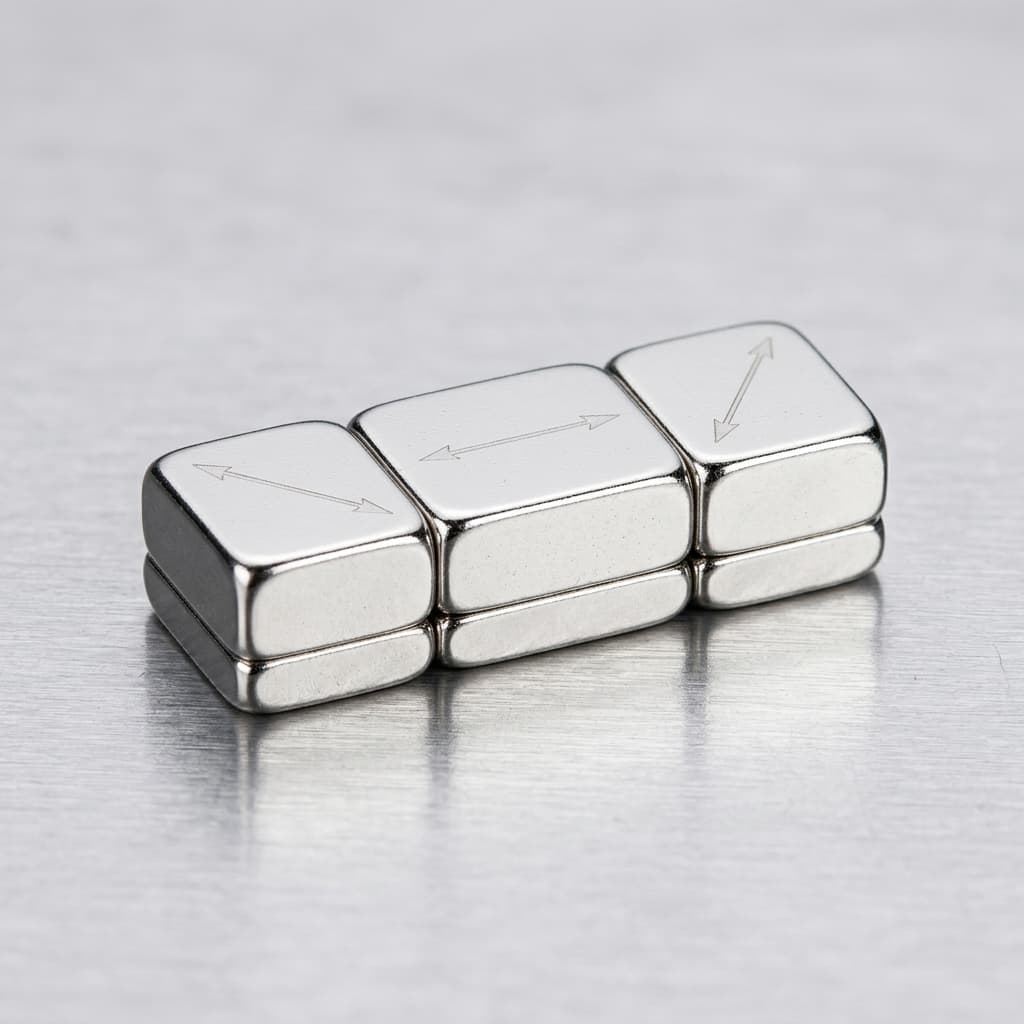
Designing Halbach Cylinders for NMR, MRI, and Scientific Research
Learn how to achieve highly uniform dipole or quadrupole magnetic fields inside a bore using discrete Halbach cylinder assemblies.
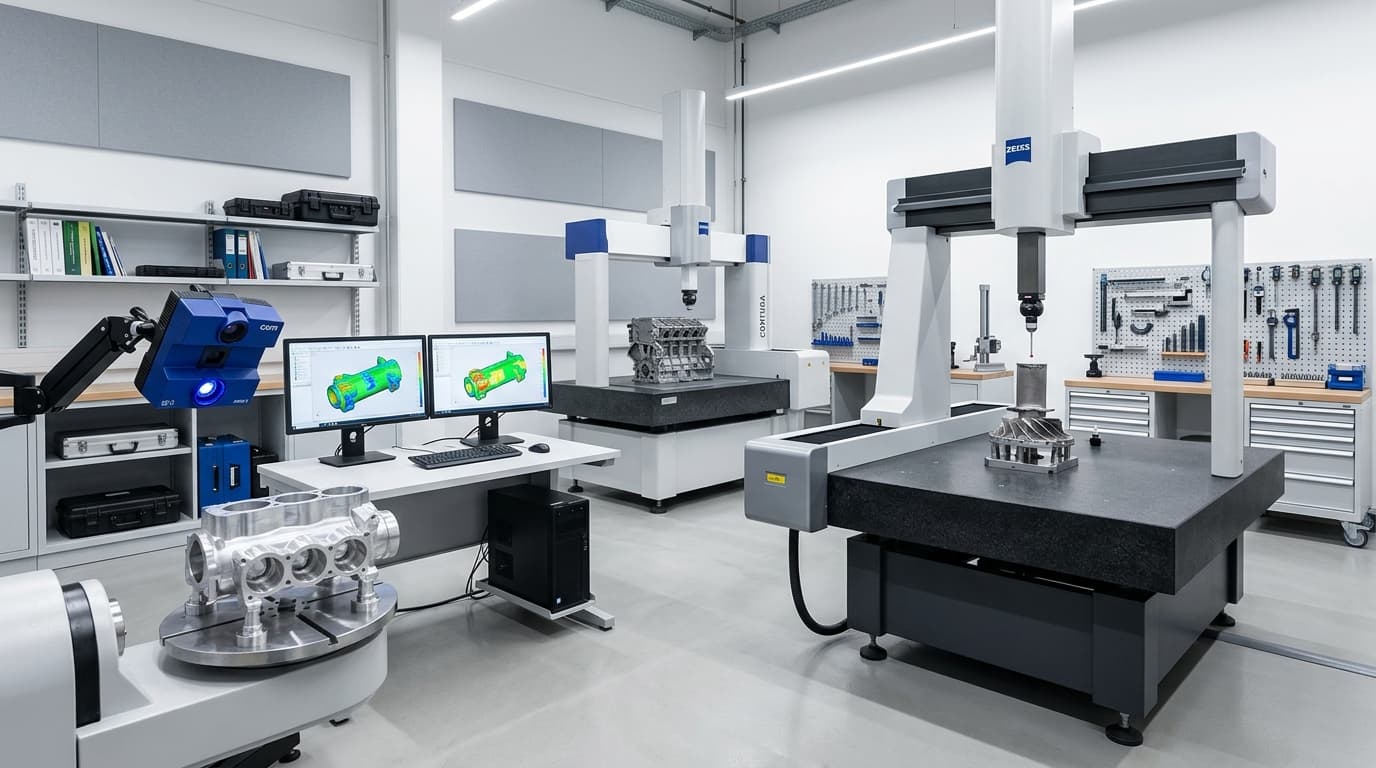
Halbach Array Quality Control: Essential Factory Testing and Validation Metrics for Buyers
Halbach Array QC guide for OEM buyers: validate 3D flux maps, Helmholtz coil data, angular deviation, CMM, salt spray, and RFQ pass/fail metrics for sourcing.
FEA Magnetic Simulation in Motor Design: How to Read a Flux Density Report
A practical guide for procurement and mechanical engineers on interpreting Finite Element Analysis (FEA) reports for magnetic assemblies and Halbach arrays.