
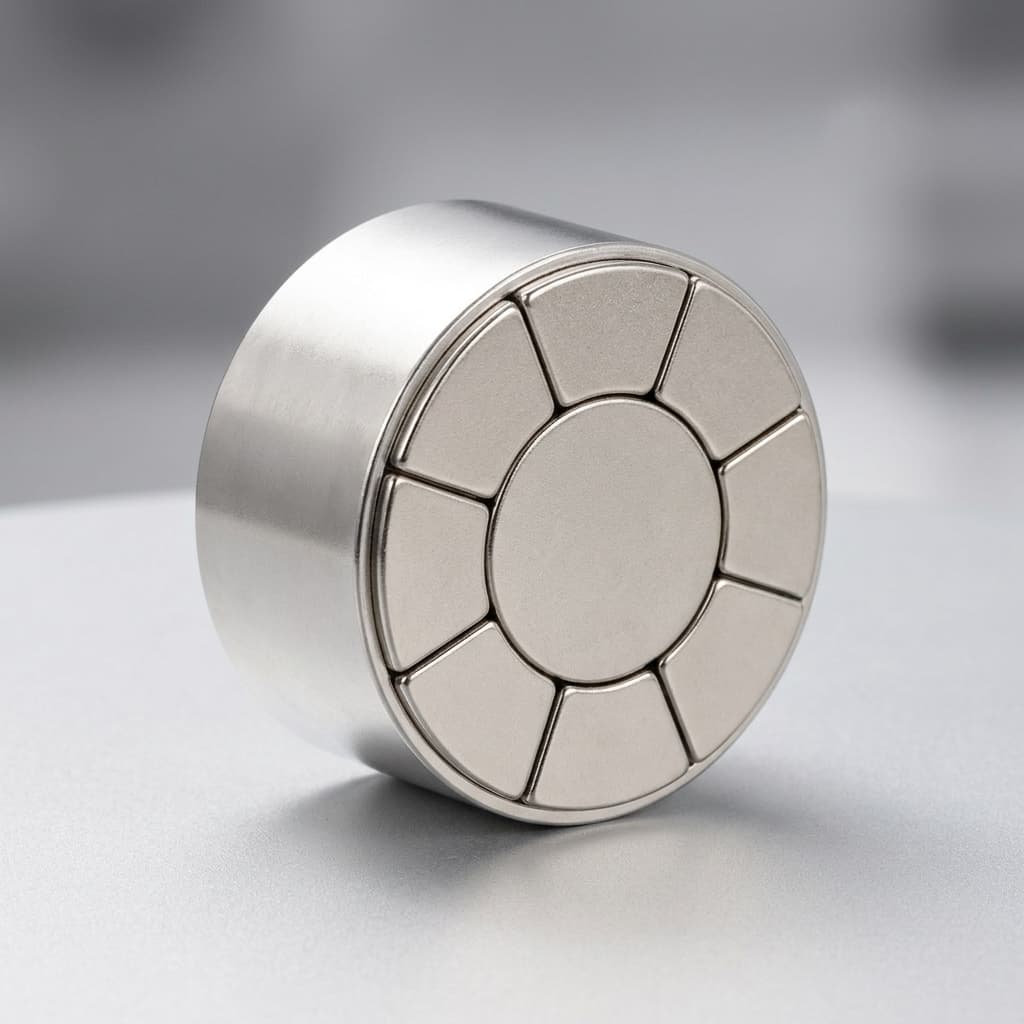
Halbach Array Assembly Tolerances: Mechanical Precision vs. Magnetic Performance
Learn how Halbach array assembly tolerances affect flux, yield, and cost, with an RFQ decision matrix and supplier checks for precision magnetic builds.
When designing and procuring custom Halbach arrays for EV motors, MRI machines, particle accelerators, or advanced magnetic couplings, a critical conflict often arises between the engineering and purchasing departments: mechanical tolerance.
Engineers demand the tightest possible tolerances (often ±0.02mm) to ensure perfect magnetic field uniformity and minimize cogging torque. Conversely, procurement teams prefer relaxed tolerances (±0.1mm to ±0.2mm) to expand the supplier pool, increase yield rates, and drastically reduce unit costs.
In this deep-dive report, we break down the exact relationship between mechanical precision, magnetic performance, and manufacturing cost. We will provide actionable frameworks and boundary conditions to help your team make informed decisions when requesting quotes for Halbach magnetic assemblies.
Scope and limits: Reviewed July 23, 2026. The tolerance, cost, yield, and flux-loss ranges below are RFQ-screening baselines for custom linear, planar, axial, and radial Halbach assemblies using rare-earth magnet segments in roughly the 10mm to 50mm scale. Treat them as engineering starting points, not guaranteed supplier quotes or a replacement for FEA, GD&T review, thermal cycling, or final 3D field mapping.
1. The Physics of Tolerance in Halbach Arrays
A traditional multipole magnet array is relatively forgiving when it comes to slight misalignments. A Halbach array, however, relies entirely on the precise, constructive, and destructive interference of the magnetic flux from adjacent segments. The core principle of a Halbach array is the one-sided magnetic flux concentration, which only works efficiently if the magnetization vectors of the segments align perfectly.
When manufacturing tolerances introduce physical air gaps or angular misalignments between the permanent magnet segments, three detrimental effects occur:
- Flux Leakage: Air has a magnetic permeability ($\mu_r \approx 1$), which is similar to the permanent magnet itself. However, unintended air gaps between segments act as high-reluctance barriers, forcing the magnetic flux to leak out of the array's "weak" side.
- Field Harmonics Distortion: In applications like BLDC motors or MRI scanners, the magnetic field must be perfectly sinusoidal or exceptionally uniform. Mechanical misalignments introduce higher-order harmonics, leading to torque ripple, vibration, and thermal losses.
- Repulsive Stress Concentrations: Halbach segments naturally repel each other with extreme force. A loose tolerance allows micro-movements during assembly, which can lead to stress fracturing of the brittle Neodymium (NdFeB) material or failure of the adhesive encapsulation.
Visualizing Tolerance-Induced Flux Leakage
Figure 1: Even small air gaps between segments cause localized reluctance variations, reducing the strong-side field and increasing weak-side leakage.
2. Dimensional Tolerances vs. Production Cost
When evaluating supplier quotations, procurement teams often see exponential cost increases as tolerances tighten. This is not arbitrary pricing; it reflects the physical reality of machining sintered Neodymium (NdFeB) or Samarium Cobalt (SmCo).
These rare-earth magnets are exceptionally brittle. Achieving a standard ±0.1mm tolerance requires basic slicing and surface grinding. However, pushing to ±0.05mm requires slow, multi-pass precision grinding with diamond abrasives. Dropping to ±0.02mm requires extreme environmental control (temperature and vibration isolation) and results in significant material waste and lower production yields.
Table: Procurement & Engineering Decision Matrix for Halbach Array Tolerances
The following table provides a comprehensive baseline for linear and planar Halbach arrays using N52 Neodymium segments (10mm - 50mm scale). This includes failure risks and buyer decision points to align engineering requirements with procurement budgets.
| Assembly Tolerance | Cost Multiplier | Yield Rate | Field Uniformity Impact | Failure Risks & Boundary Conditions | Buyer Decision Point & Supplier Comm | Recommended Applications |
|---|---|---|---|---|---|---|
| ±0.25 mm | 0.8x (Economy) | >98% | Severe distortion; >8% flux loss | High risk of loose segments; visible air gaps; poor adhesive bonding integrity. | Specify minimum adhesive thickness; prioritize raw material cost. | Educational kits, basic holding fixtures. |
| ±0.20 mm | 1.0x (Baseline) | >95% | High harmonic distortion; ~5-8% flux loss | Flux leakage causing localized heating in nearby ferrous parts; low mechanical stress. | Negotiate based on standard block tolerances; no custom grinding needed. | Magnetic separators, industrial lifting magnets. |
| ±0.10 mm | 1.3x - 1.5x | ~85% | Moderate distortion; ~2-4% flux loss | Minor torque ripple; acceptable for low-speed systems; requires controlled adhesive gaps. | Request standard CNC grinding; verify glue gap consistency with supplier. | Commercial EV motors, standard couplings. |
| ±0.05 mm | 2.5x - 3.0x | ~70% | Low distortion; less than 1% flux loss | Edge chipping during assembly; requires non-magnetic jigs and strict cleanliness. | Demand 3D field map verification; audit supplier's cleanroom and jig setup. | High-speed eVTOL rotors, precision servos. |
| ±0.02 mm | 5.0x - 8.0x | less than 50% | Near-perfect uniformity | Extreme chipping risk; thermal expansion can cause stress fractures post-assembly. | Requires multi-pass diamond grinding; insist on thermal cycling tests. | NMR spectroscopy, MRI gradients. |
| ±0.01 mm | 12.0x+ | less than 20% | Absolute theoretical max | Yields are drastically low; environmental temperature fluctuation ruins tolerance. | Only for budget-agnostic projects; require CMM inspection reports for every block. | Particle accelerators, aerospace defense. |
Note: Cost multipliers are estimates relative to baseline industrial tolerances and will vary by supplier and magnet volume.
3. Angular and Magnetization Tolerances
Mechanical dimensional tolerance is only one part of the equation. In a Halbach array, the magnetization angle of each individual block must be precisely controlled.
A standard NdFeB block might have a magnetization angle deviation of ±3° to ±5°. In a 90-degree Halbach array (4 blocks per magnetic wavelength), a 5° deviation in one block can tilt the entire flux vector, causing "hot spots" and "cold spots" across the working face.
For high-end applications, you must specify the Magnetization Angle Tolerance on your drawings. Specialized manufacturers can achieve angular tolerances of ±1° by utilizing custom magnetizing fixtures and 3D Helmholtz coil verification, though this further increases the cost.
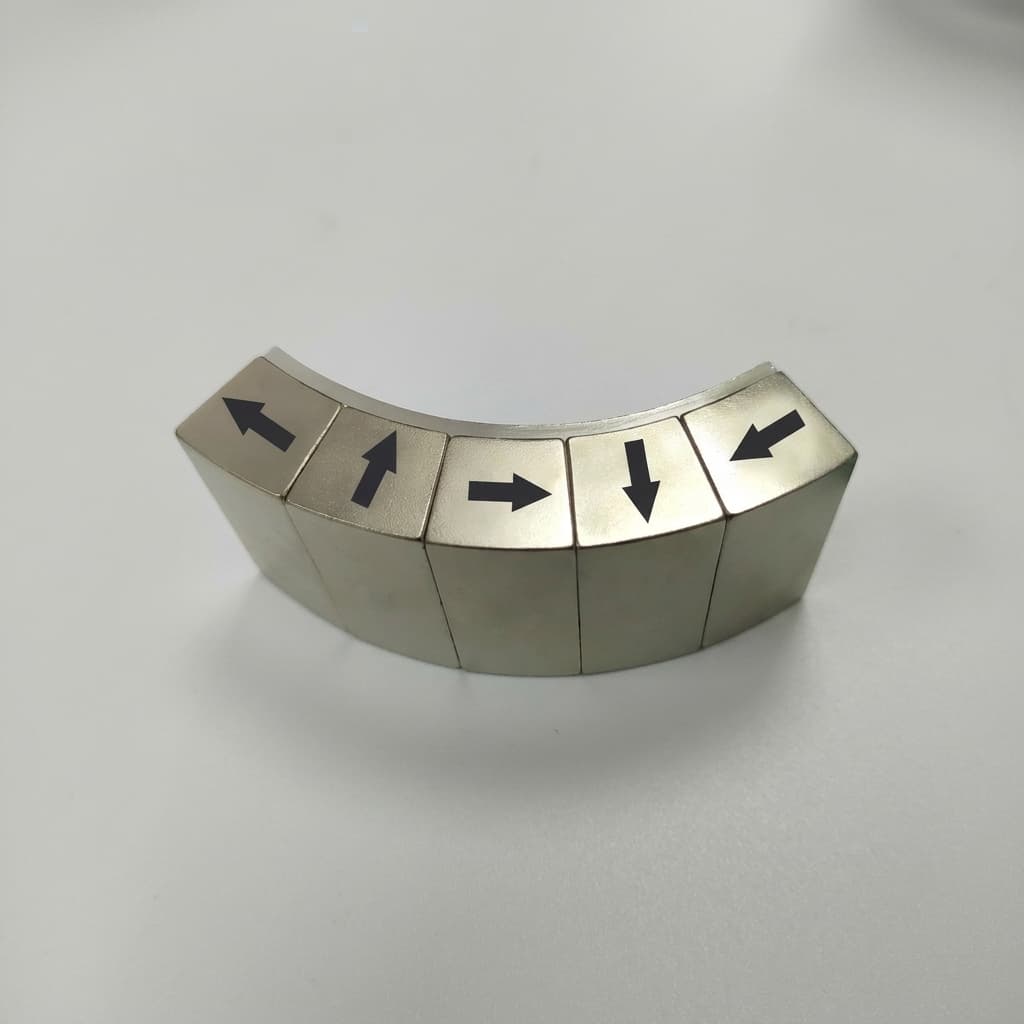 Figure 2: Precision assembly requires custom tooling and non-magnetic jigs to safely bring highly repulsive segments together while maintaining tight tolerances.
4. Engineering Boundaries: When to Invest in Tight Tolerances
The most critical decision for a project manager is determining when the expense of tight tolerances is justified.
Scenario A: High-Speed Motors (Invest in ±0.05mm)
If your application involves an axial flux or radial Halbach rotor spinning at 10,000+ RPM, tight tolerances are non-negotiable. Loose tolerances not only cause magnetic imbalance (leading to torque ripple) but also cause physical mass imbalance. The resulting vibration can prematurely destroy bearings and lead to catastrophic failure.
Scenario B: Static Holding or Linear Tracks (Relax to ±0.1mm - ±0.2mm)
If you are building a linear Halbach track for a material handling system, magnetic levitation (maglev) prototype, or an eddy current separator, absolute field uniformity is rarely required. The air gap between the track and the moving component is usually large enough to naturally smooth out minor flux variations. In these cases, relaxing tolerances can save hundreds of thousands of dollars in high-volume production.
5. Supplier Vetting & Procurement Checklist
Not all magnet suppliers have the capability to manufacture or assemble precision Halbach arrays. Sintered magnets are difficult to handle, and assembling them against their natural repulsive forces requires proprietary tooling.
Use this expanded procurement and specification checklist when evaluating potential suppliers or submitting your next RFQ:
- In-House Grinding Capabilities: Does the supplier outsource their precision grinding, or do they own high-precision CNC surface grinders?
- Assembly Tooling: Do they use custom-machined non-magnetic jigs (e.g., aluminum or brass) to safely assemble the repulsive segments?
- Adhesive and Curing (Bond Line Control): Do they control the bond-line thickness (the glue gap)? A perfect magnet tolerance is useless if the adhesive gap varies by 0.1mm. Ask for their standard operating procedure (SOP) on epoxy application.
- Quality Control Equipment: Can they provide a 3D magnetic field map (using a 3-axis Gaussmeter or Hall probe scanner) to verify the final assembly's field uniformity?
- Magnetization Verification: Can they measure the angular deviation of the magnetization vector before assembly? (Tolerance should be within ±1° to ±3° depending on the application).
- Demagnetization Risk Mitigation: Are they assembling the magnets pre-magnetized, or magnetizing the entire assembly post-gluing? (Post-assembly magnetization is often impossible for complex Halbach arrays).
- Specification Dimensions Confirmation: Are the outer diameter (OD), inner diameter (ID), and total length clearly defined with acceptable runout and concentricity tolerances?
- Inquiry Fields to Include: Always include target operating temperature, maximum RPM (if rotary), expected torque/force, and acceptable flux leakage boundaries in your RFQ.
- Packaging and Shipping Standards: Halbach arrays can interfere with aircraft navigation if not properly shielded. Ensure the supplier provides IATA-compliant magnetic shielding packaging.
6. Frequently Asked Questions (FAQ)
Can we offset loose magnet tolerances with thicker adhesive layers?
No. While thick adhesive layers (epoxy) can fill the physical voids, they act as an air gap magnetically. This increases reluctance and degrades the magnetic performance. The bond line should be as thin and uniform as possible, typically under 0.05mm.
Why is the yield rate so low for ±0.02mm tolerances?
Neodymium and Samarium Cobalt are extremely brittle, crystalline materials. When grinding down to the micron level, microscopic chipping on the edges and corners is common. Any chip that exceeds the allowable visual criteria results in the entire segment being scrapped.
Can a Halbach array be magnetized after assembly to fix angular errors?
Generally, no. The very nature of a Halbach array (where adjacent magnets have vectors pointing in completely different directions) means that placing the final assembly inside a standard magnetizing coil will not work. Each segment must be magnetized individually before assembly using highly specific fixtures.
How does mechanical tolerance impact the assembly's mechanical strength?
In rotating applications like motor rotors, loose tolerances cause mass imbalances, leading to vibration and fatigue on the mechanical retention sleeves (like carbon fiber or stainless steel banding). Tight tolerances ensure the sleeve exerts uniform compressive stress across all magnetic segments, preventing catastrophic failure at high RPMs.
Should procurement focus on individual block tolerances or final assembly tolerances?
Both, but final assembly tolerance is what matters for integration. A supplier might provide blocks with ±0.02mm precision, but if their assembly jig is inaccurate, the final outer diameter could have a ±0.15mm runout. Always specify and verify the assembled geometric dimensioning and tolerancing (GD&T).
7. Conclusion and Next Steps
Specifying tolerances for a Halbach array requires a delicate balance between the physics of flux concentration and the economic realities of machining rare-earth metals. By understanding your application's sensitivity to field harmonics, you can avoid over-engineering your components and secure better pricing.
If you are currently designing a custom magnetic system and are unsure about the required tolerances, our engineering team can help. We specialize in translating magnetic requirements into manufacturing realities.
Contact our engineering team today to review your 2D/3D drawings, run a magnetic simulation, and optimize your Halbach array tolerances for both performance and scalable production.
Sources & References
- Arnold Magnetic Technologies - Halbach array solutions
- Arnold Magnetic Technologies - High-speed permanent magnetic rotor assemblies
- Bunting / Magnet Applications - Magnetic assemblies
- Journal of Magnetic Resonance - Design and experimental validation of unilateral linear Halbach magnets for portable NMR
- Applied Sciences - Characteristic analysis, simulation, and experimental comparison of Halbach arrays
Author

Categories
More Posts
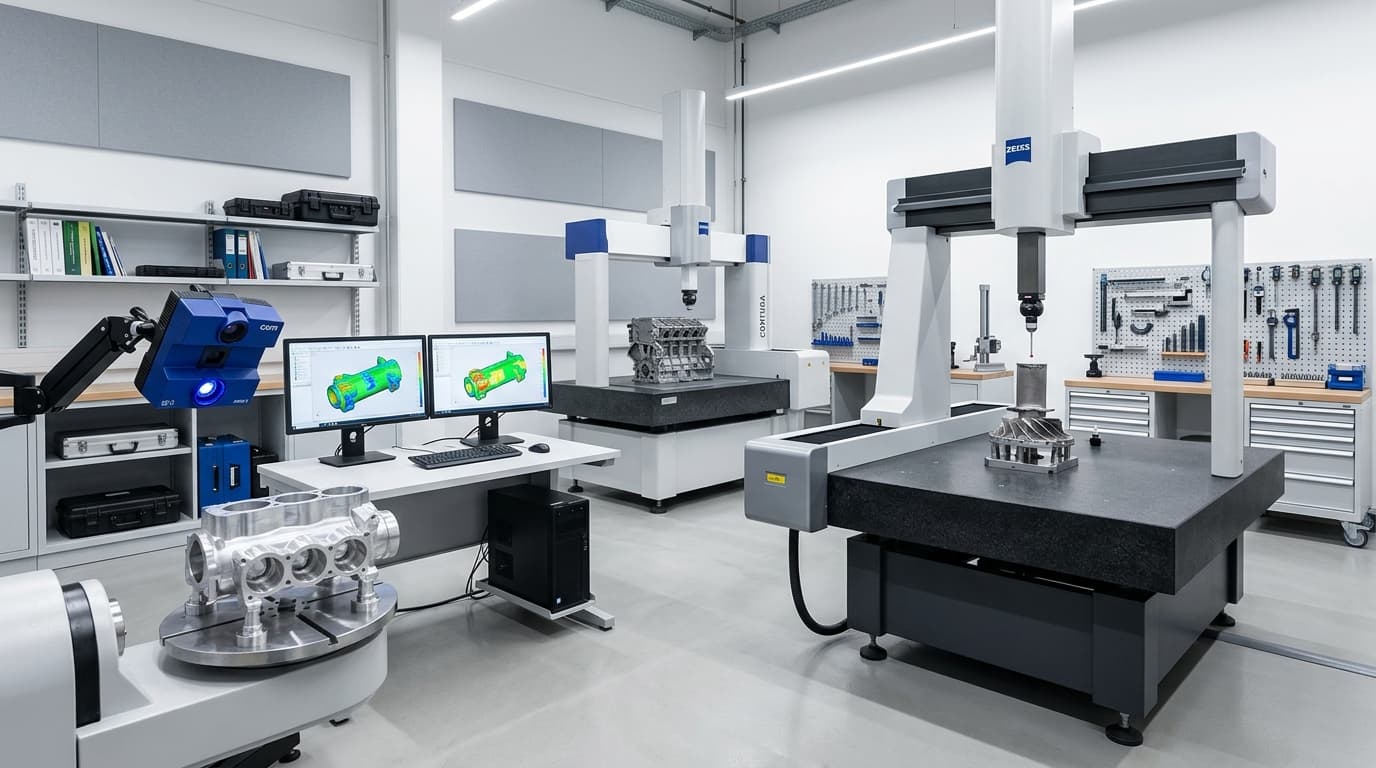
Halbach Array Quality Control: Essential Factory Testing and Validation Metrics for Buyers
Halbach Array QC guide for OEM buyers: validate 3D flux maps, Helmholtz coil data, angular deviation, CMM, salt spray, and RFQ pass/fail metrics for sourcing.
Halbach Array Adhesives and Encapsulation: A Procurement Guide for Extreme Environments
Use RFQ checks to select structural epoxies, potting compounds, and retention sleeves for high-speed, high-temperature Halbach arrays.
Designing Halbach Cylinders for NMR, MRI, and Scientific Research
Learn how to achieve highly uniform dipole or quadrupole magnetic fields inside a bore using discrete Halbach cylinder assemblies.